
 100% genuine goods Payment on delivery Nationwide Delivery
Hotline
(+84) 906922412
100% genuine goods Payment on delivery Nationwide Delivery

Description:
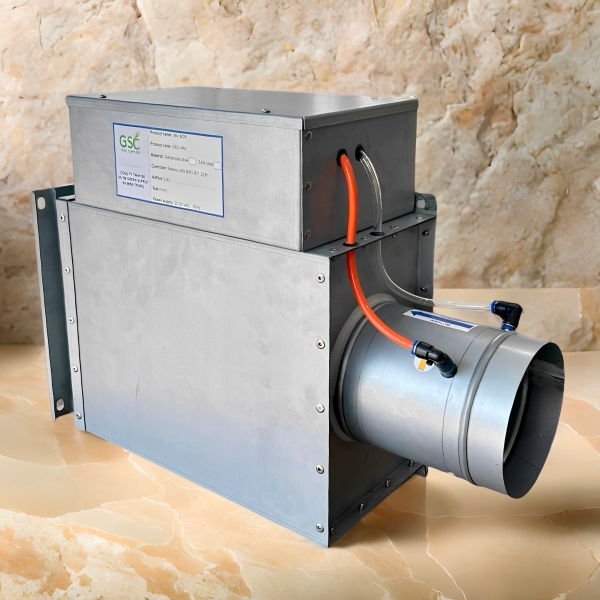
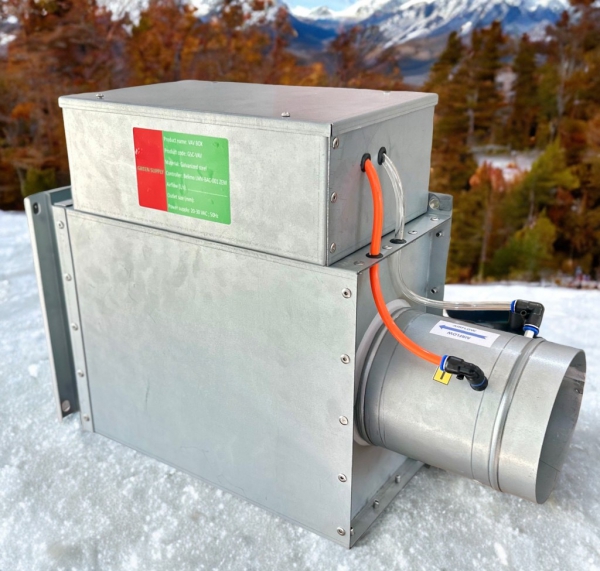
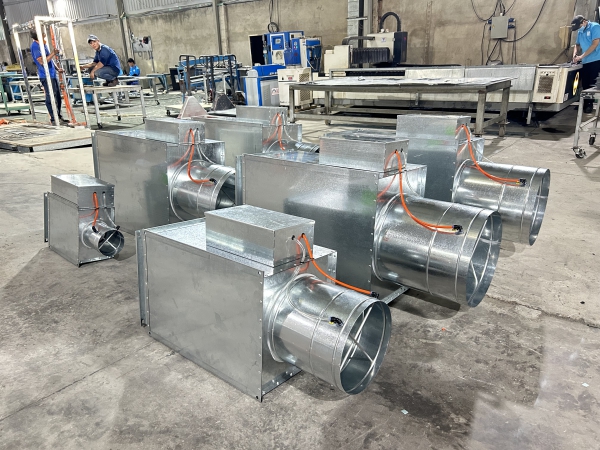
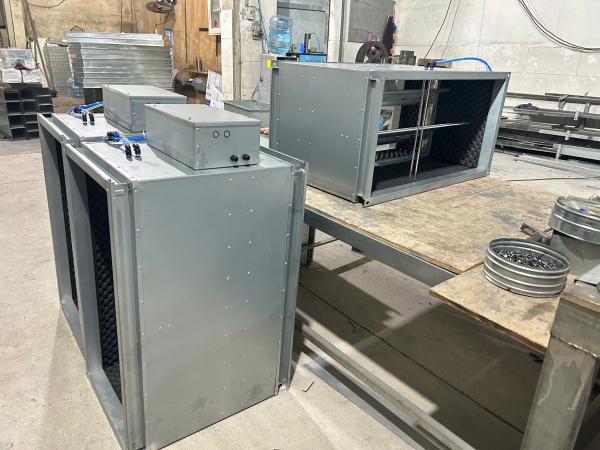
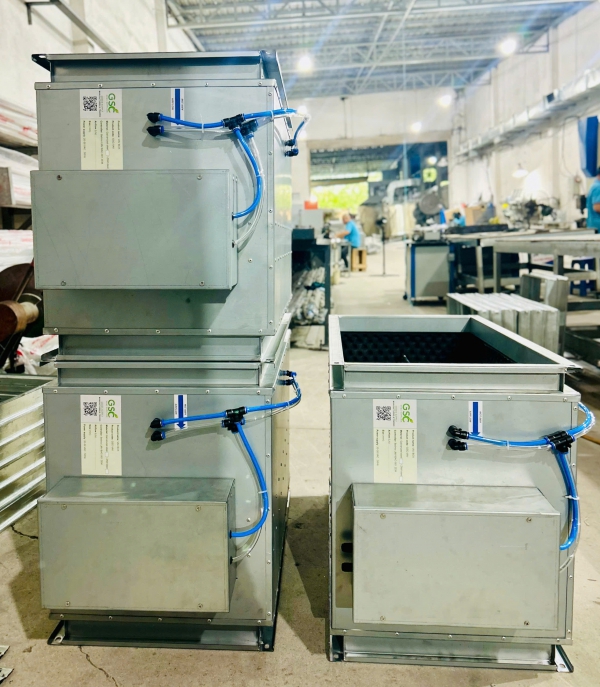
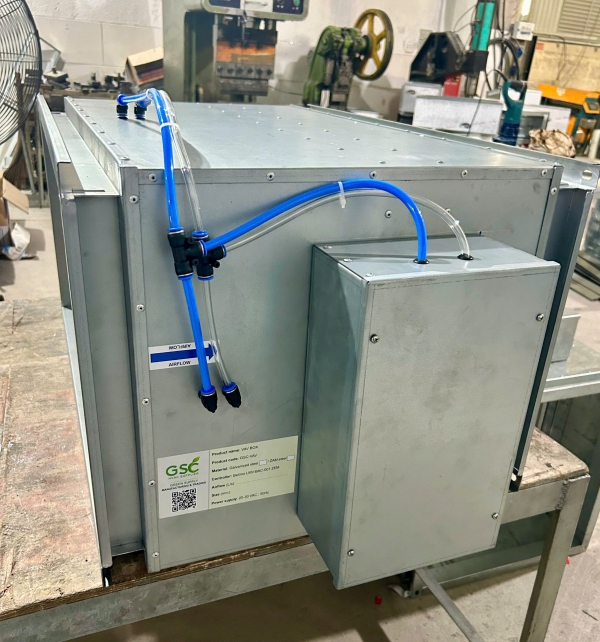
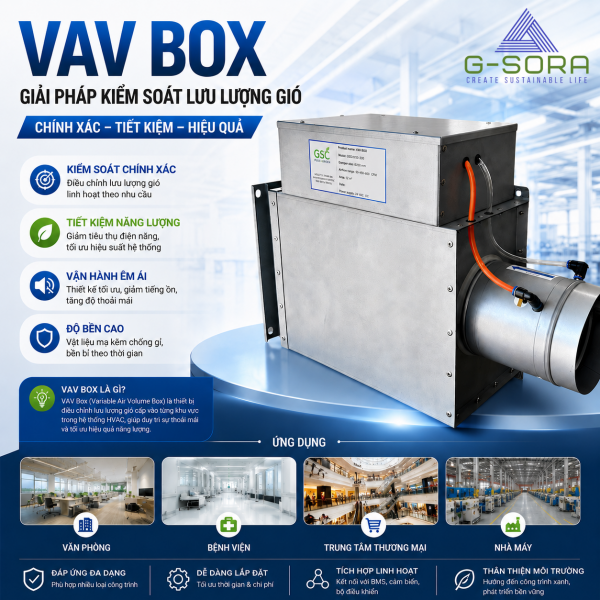
VAV BOX (Single Duct Type) is a high-technology product that our company has carefully researched, developed, and refined.
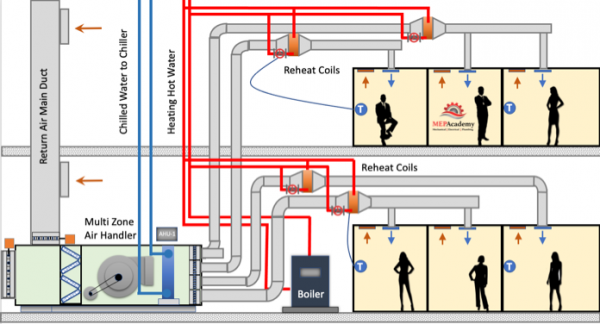
A VAV BOX (Variable Air Volume) is a component of an HVAC system (Heating, Ventilation, and Air Conditioning) designed to regulate the volume of conditioned air supplied to different zones or rooms within a building.
Unlike constant air volume systems, a VAV BOX modulates the airflow according to the specific heating or cooling demand of each individual zone, resulting in significantly improved energy efficiency—especially in applications such as shopping malls, schools, hospitals, and office buildings.
Parameter:
| Product code | GSC-VAV |
A VAV Box (short for Variable Air Volume Box) is a variable airflow control unit—an essential component in HVAC systems (Heating, Ventilation, and Air Conditioning).
Its primary function is to automatically regulate the volume of supply air in response to the actual thermal demand of each individual space, ensuring that room temperature remains stable at the preset setpoint.
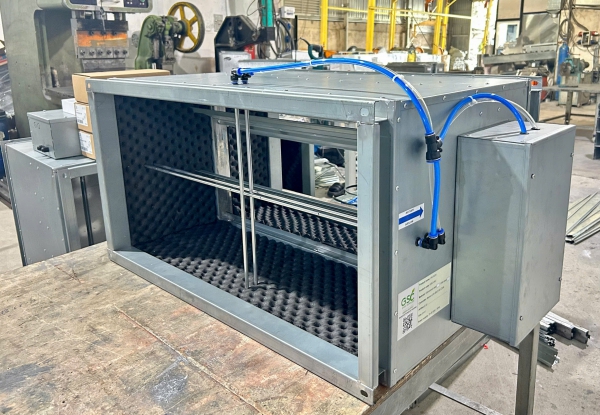
A standard VAV Box typically consists of the following components:
Casing: Made of galvanized steel or corrosion-resistant stainless steel
Air damper: Aerodynamically designed to minimize pressure loss and noise
Airflow sensor: Differential pressure-based measurement for accurate airflow control
Actuator: Electric or pneumatic type
Controller: Fully compatible with DDC and BMS systems
Thermal and acoustic insulation: Maintains temperature stability and reduces noise transmission within the duct system
The casing is fabricated from ZAM-coated steel or Z275 galvanized steel, with a thickness of 1.0 mm, providing excellent structural rigidity and long-term durability.
ZAM steel (Nippon Steel):
A special alloy composed of 91% zinc, 6% aluminum, and 3% magnesium. This material has been tested and proven to offer up to 10 times higher corrosion resistance than conventional steel, complying with JIS G3323 (Japan) standards.
Z275 galvanized steel:
Features a zinc coating mass of 275 g/m², forming a robust protective layer that significantly extends product service life.
Fully compliant with major international standards, including JIS G3302 (Japan), BS EN 10346 (Europe), AS 1397, and ASTM A792 (USA).
The Belimo controller is integrated with advanced features to optimize system performance and control accuracy:
Monitoring and regulation of room temperature or indoor air quality (CO₂)
Communication support via BACnet MS/TP or Modbus RTU
Connectivity with peripheral devices through MP-Bus or analog/digital I/O signals
Built-in NFC antenna for simplified commissioning, operation, and maintenance
The internal acoustic lining has a thickness of 25 mm and is certified according to international standards for sound insulation, fire resistance, and health safety.
Thermal conductivity (ASTM C518): 0.035 W/m·K, ensuring excellent insulation performance
Mold resistance (ASTM C1338): No fungal growth under normal operating conditions
Wide operating temperature range: –80°C to +100°C
Fire performance: Class 0 in accordance with BS 476 Part 6 & 7
Smoke toxicity compliant with EN 45545-2
A VAV Box is designed to modulate the supply airflow of conditioned air to individual zones.
Unlike CAV (Constant Air Volume) systems that deliver a fixed airflow rate, a VAV Box adjusts airflow based on actual thermal load. This modulation is achieved through a damper controlled by an actuator and sensors, integrated with a DDC (Direct Digital Control) or BMS (Building Management System).
The Single Duct configuration is the simplest and most cost-effective type of VAV Box. It uses a single supply duct and one modulating damper, resulting in lower pressure losses and reduced installation costs compared to dual-duct or fan-powered VAV systems.
This configuration is ideal for cooling-dominant buildings or applications where heating is handled separately via reheat coils.
By controlling airflow instead of supply air temperature, VAV systems can reduce fan energy consumption by 30–50% and significantly decrease the load on central cooling equipment.
Each zone operates independently, maintaining the desired temperature and eliminating uneven cooling issues such as “cold at the front, warm at the back.”
Aerodynamic design and acoustic lining ensure sound levels below 35 dBA
Minimal moving components result in low maintenance requirements, primarily limited to sensor cleaning and periodic damper inspection
Single Duct VAV Boxes are widely applied across various building types—from commercial high-rises and hospitals to luxury residential developments.
Each environment presents unique operational and microclimate requirements, and VAV systems provide flexible zonal control to achieve optimal performance, acoustic comfort, and thermal stability.
In high-rise buildings, shopping malls, and open-plan offices, Single Duct VAV Boxes enable:
Uniform air distribution to workspaces and meeting rooms
Easy connection to flexible ducts and standard ceiling diffusers
Reduced excess static pressure and lower central fan energy consumption
Adaptability to space reconfiguration (partitions, flexible office layouts)
This is the most common application due to its cost-effectiveness and long-term operational stability.
In environments requiring strict pressure and cleanliness control, VAV Boxes play a critical role by:
Maintaining positive or negative pressure differentials (operating rooms, isolation rooms, sterile areas)
Controlling air changes per hour (ACH) in compliance with ASHRAE 170 and ISO 14644
Stabilizing temperature and humidity without compromising cleanliness
Allowing integration of airflow sensors and door status monitoring
As a result, VAV systems ensure biosafety, energy efficiency, and precise environmental control in modern healthcare and laboratory facilities.
In high-end apartments and villas, VAV Boxes are used to:
Create independent control zones for each room (bedrooms, living rooms, kitchens, etc.)
Integrate with smart thermostats for automatic temperature control
Minimize noise and enhance occupant comfort
Optimize energy consumption for central AHU or VRF systems
The integration of VAV Boxes with smart control platforms (IoT/BMS) enables modern residential buildings to achieve the highest standards of energy efficiency and indoor comfort.
Install according to the airflow direction indicated on the casing
Use flexible duct connectors and acoustic gaskets to prevent vibration and air leakage
Employ vibration-isolated supports to minimize noise transmission through ceilings
Perform air balancing using calibrated measurement instruments after installation
Adjust damper positions and airflow setpoints via the DDC interface to meet design requirements
Verify proper operation of actuators, sensors, wiring, and reheat coils (if applicable)
Ensure compliance with UL or CE standards before system startup
When properly installed and maintained, VAV Boxes deliver stable airflow control, high operational efficiency, and significant energy savings for modern HVAC systems.


