 100% genuine goods Payment on delivery Nationwide Delivery
Hotline
(+84) 906922412
100% genuine goods Payment on delivery Nationwide Delivery

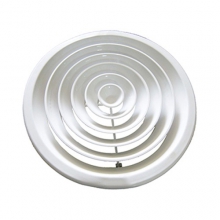
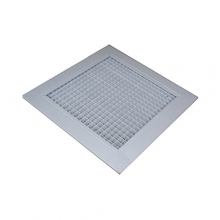
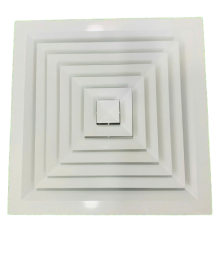
Ceiling-mounted air diffusers are essential components in HVAC systems, responsible for optimal air distribution while enhancing the overall aesthetics of the building.
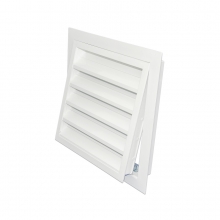
Air dampers are indispensable components in central air-conditioning systems. Although they often receive less attention than major equipment such as air-conditioning units or fans, air dampers play a critical role in regulating airflow volume and direction according to actual operational demands. A thorough understanding of HVAC air dampers enables investors, MEP engineers, and end users to optimize system performance while reducing operating costs.
An HVAC air damper is a device installed within ductwork to regulate or completely shut off airflow passing through the air duct. Depending on application requirements and installation location, air dampers are available in various types and configurations.
The primary function of an air damper is to control the supply or return airflow within duct systems, specifically:
Reducing energy losses when airflow distribution to a specific zone is not required
Balancing airflow between multiple duct branches to maintain uniform temperature distribution
Enhancing operational flexibility, especially in large-scale buildings such as shopping malls and office towers
Air dampers also help optimize static pressure within duct systems, thereby reducing fan energy consumption.
Not every system requires separate air dampers; however, installation is recommended in the following cases:
Systems with multiple supply or return duct branches
Zones requiring independent airflow control
Systems with strict requirements for pressure and noise control
Integration with Building Management Systems (BMS)
Air dampers are commonly installed near duct outlets connected to air diffusers, forming an effective airflow control assembly.
In central air-conditioning systems—especially concealed ducted systems—ceiling-mounted air diffusers serve as the terminal devices that distribute or return air within occupied spaces. These components combine technical airflow distribution functions with high aesthetic value, thanks to their compact and nearly invisible ceiling integration.
An air diffuser is the final element in the HVAC air distribution chain. It is installed at the duct outlet to supply conditioned air into a room or extract return air back to the cooling system.
Basic operating principle:
Conditioned air is pushed by the fan through ductwork → discharged through air diffusers → distributed into the occupied space
Room air is extracted via return air diffusers → returned to the cooling system → recirculated
Concealed ceiling diffusers are typically designed with diffusion patterns to ensure even airflow distribution, preventing localized cold drafts and minimizing noise.
There are two main types of air diffusers:
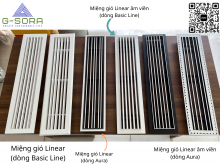
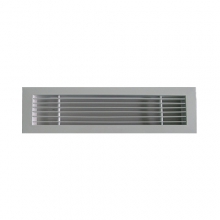
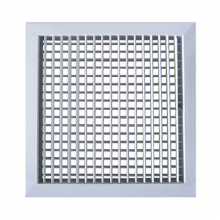
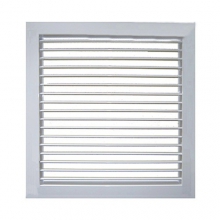
Supply air diffusers: Deliver cooled air into the room. Commonly square or linear types, designed for uniform air dispersion.
Return air diffusers: Extract warm or used air back to the system. Usually equipped with dust filters and positioned lower or opposite supply diffusers.
Proper diffuser selection directly impacts cooling efficiency, temperature uniformity, and occupant comfort.
Concealed ceiling air diffusers are widely favored due to:
High aesthetic appeal: Fully integrated into gypsum ceilings with slim, clean lines
Uniform air distribution: Diffusion design eliminates uncomfortable air jets
Space efficiency: No wall or floor space required—ideal for offices, showrooms, and high-end residences
Ceiling compatibility: Suitable for suspended, concealed, and metal ceilings
As a result, concealed ceiling diffusers have become the standard choice in modern HVAC installations.
Although air dampers and diffusers perform different functions, both must ensure efficient airflow, durability, and low noise generation. Proper construction and material selection are essential for optimal HVAC system performance.
Typical components include:
Frame: Secures the device to ducts, ceilings, or walls—commonly aluminum or galvanized steel
Blades: Control airflow direction and volume. Dampers may fully open/close, while diffusers may have fixed or adjustable blades
Dust filters: Typically used in return air diffusers
Accessories: Adjustment screws, handles, hinges, or electric actuators for advanced models