
Introduction
In HVAC (heating, ventilation and air conditioning) design for factories, the choice of diffuser material affects not only appearance but also cooling performance, durability and operating cost. Today, powder-coated aluminium diffusers and plastic diffusers are the two leading options.
So which is the smart choice for your factory? Let's compare them in detail.
1. Powder-coated aluminium diffusers: the standard for durability
Aluminium diffusers are the traditional choice, made from extruded aluminium typically 0.8–1.5 mm thick and finished with a protective powder coating.
Key advantages
- Very high mechanical strength: good impact resistance, no deformation from knocks in an industrial environment.
- Heat and fire resistance: aluminium is non-combustible and withstands high temperatures – suitable for metalworking, foundries and high fire-risk areas.
- Flexible sizing: can be made to measure for specific positions in the factory.
Drawbacks to consider
- Condensation: because aluminium conducts heat well, a large temperature difference between the cold supply air and the surrounding air causes water to form on the diffuser face and drip onto the factory floor.
- Weight: heavier than plastic, requiring sturdier hangers and threaded rods.
2. ABS plastic diffusers: the modern anti-condensation solution
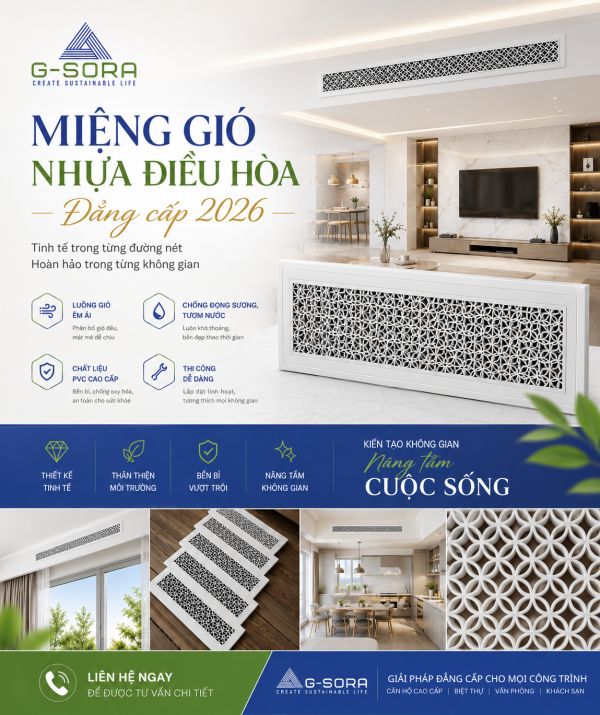
Plastic diffusers are made from acrylonitrile butadiene styrene (ABS), a material known for its thermal insulation and moisture resistance.
Key advantages
- Excellent condensation control: plastic is a natural thermal insulator, so plastic diffusers eliminate "sweating" grilles and protect machinery and goods below.
- Very light weight: easier and safer installation at height, with less load on the ceiling system.
- Total corrosion resistance: no oxidation or rust – ideal for seafood processing plants, cold stores and chemical environments.
Limitations to consider
- Lower heat resistance than aluminium
- May become brittle or discoloured with long exposure to high temperatures
3. Quick comparison: aluminium vs plastic diffusers
| Criteria |
Aluminium diffuser |
ABS plastic diffuser |
| Durability |
⭐⭐⭐⭐⭐ |
⭐⭐⭐ |
| Condensation control |
⭐⭐ |
⭐⭐⭐⭐⭐ |
| Corrosion resistance |
⭐⭐⭐⭐ |
⭐⭐⭐⭐⭐ |
| Weight |
Heavy |
Light |
| Heat resistance |
Very good |
Moderate |
| Cost |
Higher |
Economical |
4. Which should you choose for your factory?
Choose aluminium diffusers when:
- The factory is hot and runs heavy production
- Fire resistance and long-term durability are required
- The area is prone to impact
This choice prioritises durability and safety.
Choose ABS plastic diffusers when:
- The facility processes food, pharmaceuticals or electronics
- Areas are air-conditioned continuously and prone to condensation
- The environment is humid, chemical or a cold store
This is the optimal choice to protect goods and equipment.
5. The best solution today
In practice, many contractors combine both:
- Aluminium diffusers for natural ventilation and load-bearing locations
- Plastic diffusers for cooled supply air (to prevent condensation)
This approach balances performance, cost and long-term durability.
Conclusion
Both aluminium and plastic diffusers have their strengths. A growing practice is to combine them: aluminium for natural ventilation openings and plastic air diffusers for air-conditioning outlets to achieve the best results.
Need a diffuser quotation for a factory project? Contact us for technical support and the best contractor discounts.
G-SORA CO., LTD
Address: 18 Dong Van Cong, Binh Trung Ward, Thu Duc City, Ho Chi Minh City
Hotline: 0866 016 027
Email: company.gsora@gmail.com
Website: https://g-sora.vn