 100% genuine goods Payment on delivery Nationwide Delivery
Hotline
(+84) 906922412
100% genuine goods Payment on delivery Nationwide Delivery

A flange joint with a badly applied gasket can fail an entire duct leakage test: cold air escapes into the ceiling void, condensation forms around the joint, and the crew has to take it apart and redo it. This article covers the two things contractors ask G-SORA about most: which gasket to use on the flange and how to apply it so the joint seals the first time.
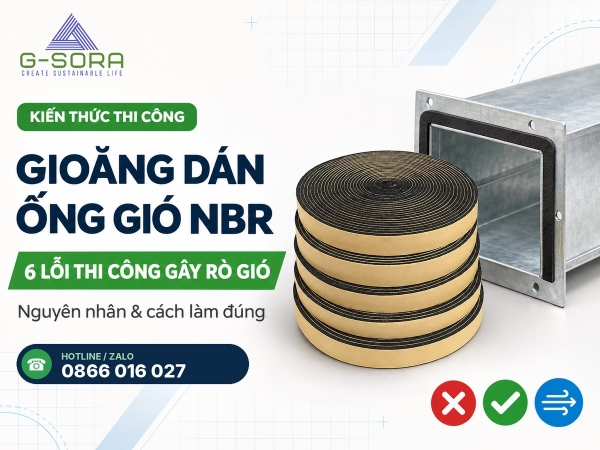
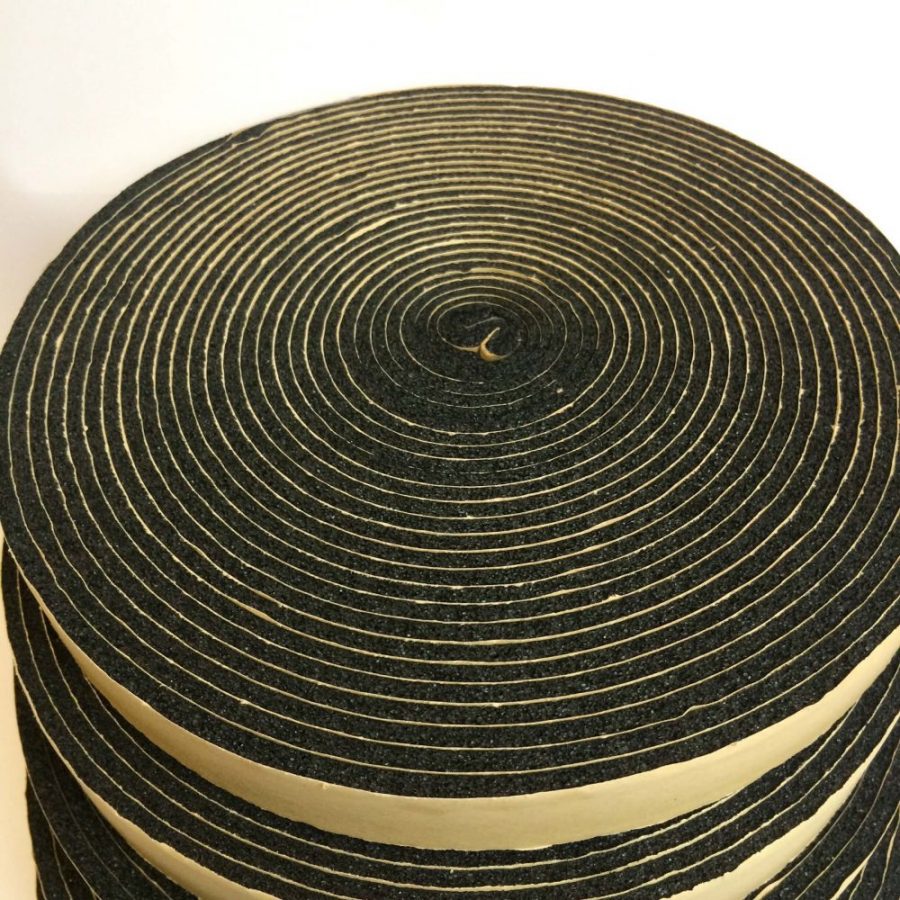
NBR gasket is closed-cell nitrile foam rubber supplied in rolls, with adhesive pre-applied on one side. It is stuck to the duct flange before the bolts are tightened, filling the gap between the two metal faces so air cannot escape and reducing vibration through the joint. Because the cells are closed, the gasket does not absorb water, so it can be used in basements, AHU rooms and cold rooms.
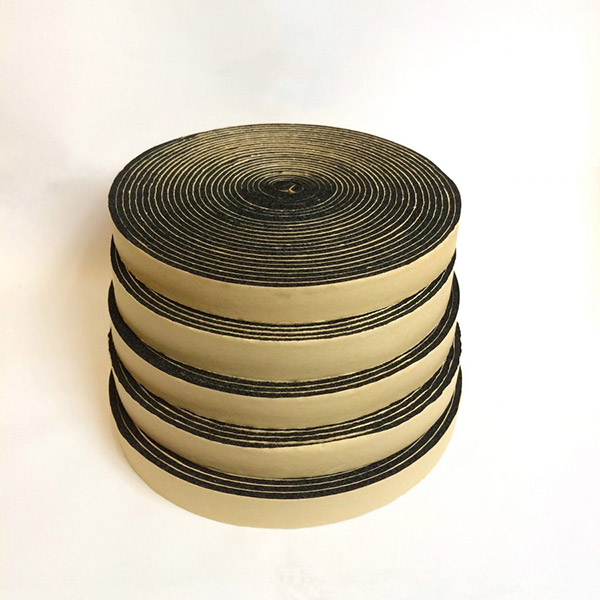
| Specification | Value |
|---|---|
| Product code | RON 01/02 |
| Thickness | 5 mm |
| Width | 25 mm, 30 mm |
| Length | 10 m/roll |
| Density | 85 kg/m³ |
| Thermal conductivity | 0.034 W/mK |
| Operating temperature | −50 °C to 110 °C |
| Adhesive peel strength | 1.6 ± 0.2 kg/25 mm |
| Fire rating (per manufacturer) | ASTM D6435, BS 476 Part 7, UL 94 |
See details and order on the NBR Duct Gasket Tape page.
Choose a width that fits the flange. The gasket should sit fully on the contact face – not protruding into the duct (blocking air and collecting dust) and not overhanging the outer edge of the flange.
Need a different width or thickness? Contact G-SORA to check stock.
Dust, anti-rust oil and moisture on galvanised steel stop the adhesive from bonding to the metal. The gasket looks stuck, but slides out of place when the ducts are joined and the bolts are tightened.
The right way: Clean the flange with a dry cloth or industrial alcohol and let it dry completely before applying the gasket.
Foam rubber is elastic. If it is pulled tight while being laid, it shrinks back a few days later and opens gaps at the corners and at the joint.
The right way: Lay the gasket loosely along the flange edge and press it down by hand as you peel the release paper.
A gap between the two ends is the easiest path for air to escape. A thick overlap creates a bump, so the flanges do not seat evenly and the sides next to it leak instead.
The right way: Cut the ends square with a sharp knife and press them firmly together – no gap and no overlap.
Gasket that protrudes into the duct obstructs airflow and collects dust, while the outer edge is left without gasket and still leaks.
The right way: Align the gasket with the inner edge of the flange and choose a width that matches the contact face (25 mm or 30 mm).
Fully tightening one side before moving to the next crushes the gasket on that side and leaves a gap on the opposite side.
The right way: Tighten the bolts in a cross pattern, increasing torque gradually until all four sides are evenly compressed.
When ducts with gasket already applied sit on site for a long time, sunlight weakens the adhesive and the gasket gets dirty and deformed before installation.
The right way: Apply gasket close to the time the ducts are joined. Store unused rolls in a cool, dry place out of direct sunlight.
Never reuse gasket that has been peeled off – the adhesive has picked up dust and lost its grip. After joining, run your hand along the corners; fix any gaps right away, before the duct is insulated.
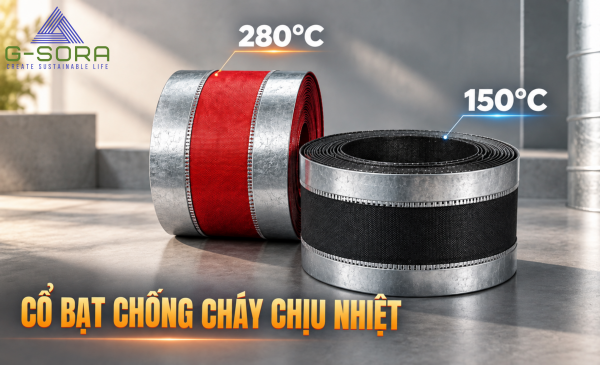
Is NBR gasket for cold air or hot air ducts? It works from −50 °C to 110 °C, so it suits cold supply air, fresh air, return air and general ventilation. Kitchen exhaust or hot gas above this range needs a dedicated high-temperature gasket, such as fiberglass duct gasket.
Gasket on one flange or both? Normally one flange per joint is enough. If the design documents specify otherwise, follow the consultant's requirement.
Send G-SORA your duct sizes and number of joints (or your ductwork BOQ). Our engineers will calculate the number of rolls and quote a complete package with other finishing materials: insulated flexible air duct, aluminium foil tape, simili wrapping tape. Warehouses in North, Central and South Vietnam, nationwide delivery.