 100% genuine goods Payment on delivery Nationwide Delivery
Hotline
(+84) 906922412
100% genuine goods Payment on delivery Nationwide Delivery

Description:
Strong Adhesive: High-tack bonding for easy application without the need for pre-heating.
Moisture & Vapor Barrier: Effectively prevents moisture ingress and vapor transmission to maintain cooling performance.
Thermal Reflectivity: Excellent heat and UV radiation reflection for improved energy efficiency.
Pure Aluminum Construction: Non-conductive and safe for various installation environments.
Versatile HVAC Use: Perfectly suited for sealing air ducts, cold storage insulation, and industrial thermal barriers.
Joint Sealing: Provides a secure seal for insulation joints, enhancing overall system protection.
Cost-Effective: A budget-friendly solution that ensures rapid and efficient project completion.
Parameter:
| Product code | BKB-1 |
| Total Thickness | 36 Micron |
| Aluminum Foil Backing Thickness | 16 Micron |
| Adhesion to Steel | 12 N/25mm |
| Polished / Glossy Finish | 25 cm |
| Tensile Strength | 25 N/25mm |
| Elongation | 3.0 % |
| Operating Temperature Range | -20 to +80°C |
| Dimensions | W48mm x 25mL (25m/roll) |
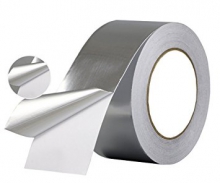
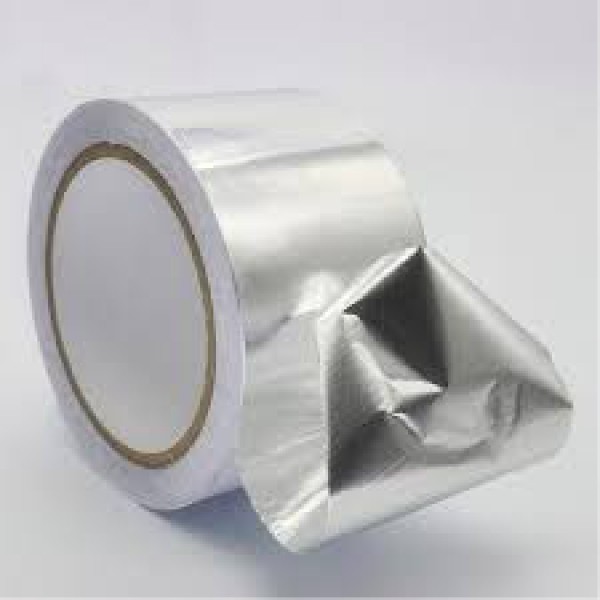
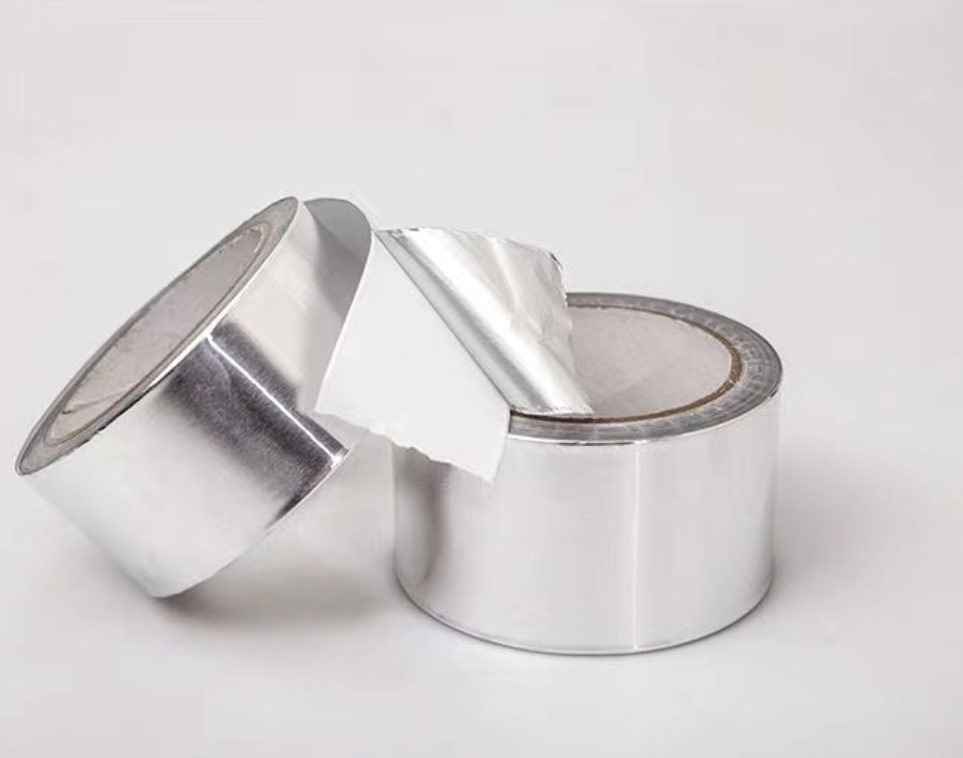
Standard aluminum foil tape is typically made of three main layers:
Base layer: Pure aluminum foil with a thickness of 16 microns, providing a reflective surface for heat reflection and mechanical durability.
Adhesive layer: Solvent-based acrylic adhesive with strong bonding performance on various surfaces, especially metal, plastic, and insulation materials.
Release liner: A silicone release paper that protects the adhesive during storage and allows easy peeling during installation.
This layered structure enables aluminum foil tape to deliver key functions such as heat resistance, fire resistance, vapor sealing, and improved durability for insulated materials.
Although often overlooked, the silicone release liner plays a crucial role in making installation faster and more professional. Its smooth, non-stick surface protects the adhesive from oxidation, drying, or contamination before use.
During installation, workers simply peel off the liner and the tape is ready to apply—no heating or additional treatment required. This is especially beneficial in industrial environments where speed and precision are critical.
Typical characteristics of 36-micron aluminum foil tape include:
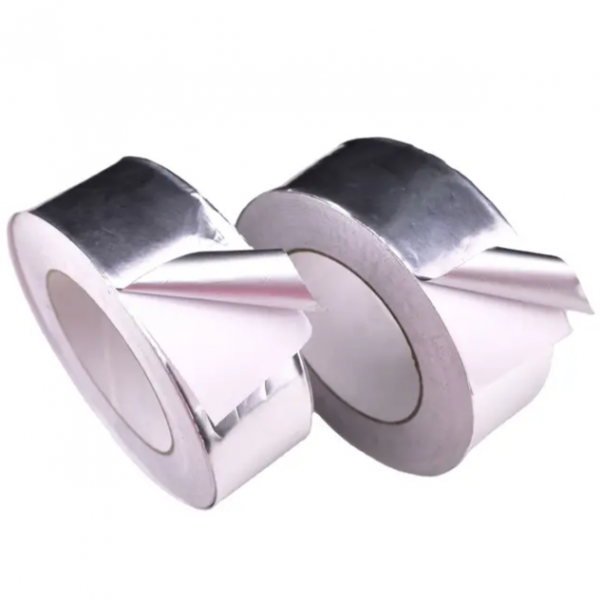
Matte aluminum surface, flat rolled, not overly shiny like decorative foil.
Transparent adhesive with a slightly yellowish or milky tone, bonding well to steel and duct surfaces.
White release liner, slightly thicker than premium types (easy to peel by hand).
When torn by hand, the aluminum layer tears slightly and is less reinforced compared to fiberglass-reinforced aluminum tape.
These features help distinguish genuine aluminum foil tape from counterfeit products lacking real aluminum or using poor-quality adhesive.

In industrial installation, not only adhesion but also reflectivity, insulation, and durability are essential. This is why aluminum foil tape remains a standard material in HVAC, refrigeration, cold storage, and insulation applications.
The pure aluminum surface provides high reflectivity for heat and sunlight, creating a thermal barrier that reduces heat loss from ducts or cold storage systems.
In HVAC ducts, aluminum tape seals joints to reduce cooling energy loss.
When used outdoors, reflective properties reduce heat absorption and extend the lifespan of underlying materials.
Studies in mechanical and electrical engineering show that properly sealed duct systems using high-quality aluminum tape can save 8–12% in cooling energy costs compared to unsealed or poorly sealed systems.
Fire resistance is a major advantage compared to plastic tapes. The aluminum layer does not ignite; when exposed to flame, it may discolor but does not sustain combustion.
Additional benefits include:
UV resistance: Protects adhesive from degradation under sunlight
Oxidation resistance: Helps protect metal surfaces from mild oxidation
This makes aluminum foil tape suitable for outdoor applications, roofing, and cold storage exposed to harsh weather.
Aluminum foil tape has very low vapor transmission, acting as an effective moisture barrier. When applied over insulation joints or mineral wool, it:
Prevents cold air leakage
Reduces condensation and mold formation
Maintains long-term insulation performance
These properties are essential in HVAC and cold storage installations where humidity directly impacts system efficiency.
This is the most common use, accounting for about 70% of market demand:
Sealing insulation duct joints
Reinforcing mineral wool or foam insulation
Protecting insulation surfaces from scratches and impact
Proper application improves both aesthetics and insulation performance.
Common uses include:
Sealing copper or steel weld joints in condensers and evaporators
Sealing foam insulation to prevent thermal leakage
Temporary repair of small insulation cracks
In cold storage environments, using proper cold-resistant aluminum tape (e.g., 36 microns) ensures stable operation without condensation or vapor leakage.
In smaller construction or household uses, aluminum tape is used to:
Cover roof insulation panels
Seal cold room doors to prevent air leakage
Patch minor cracks in ducts or frames
It is ideal for quick repairs and temporary installation due to easy handling and no special tools required.
This thickness is ideal for:
Sealing central air-conditioning duct joints
Reinforcing indoor mineral wool or foam insulation
Cold storage or food-processing environments under 80°C
Cost-effective applications requiring reliable vapor sealing
When applied on clean, dry, and relatively flat surfaces, it can maintain adhesion for 2–4 years without peeling.
Common mistakes that reduce adhesion:
Applying on dusty, oily, or wet surfaces
Storing tape in high temperature, causing adhesive drying
Not pressing firmly, leaving air bubbles
Best practices:
Clean surface with alcohol or dry cloth
Apply firmly, pressing from center outward to remove air bubbles
Store in dry, cool environment below 35°C
If 36-micron tape must be used outdoors:
Apply double-layer overlap at joints for stronger adhesion
Add UV-protective coating over the tape
Apply during cool hours (morning or late afternoon)
While not equal to premium-grade tape, proper technique allows standard tape to meet 70–80% of outdoor performance requirements.
Standard 36-micron aluminum foil tape is an economical and effective solution for indoor or moderate-temperature environments. When properly applied, it provides good durability, moisture resistance, thermal insulation, and heat reflection. Selecting the right tape for the environment ensures long-term performance and cost efficiency, making it a reliable choice for small to medium industrial projects.