 100% genuine goods Payment on delivery Nationwide Delivery
Hotline
(+84) 906922412
100% genuine goods Payment on delivery Nationwide Delivery

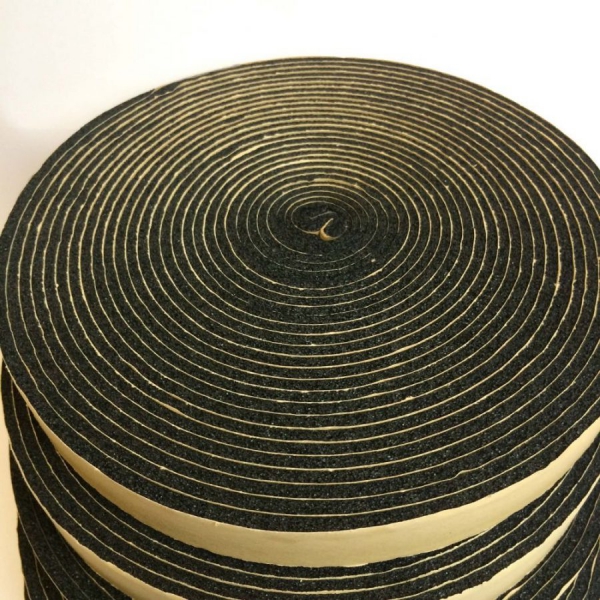
Description:
Industrial Resistance: Excellent resistance to oils, grease, and chemicals—perfect for demanding industrial environments.
Airtight Sealing: Eliminates air leakage to maximize HVAC system efficiency.
Thermal & Acoustic Insulation: Superior insulation properties significantly reduce energy loss and dampen noise.
Wide Temperature Range: Operates reliably from $-50^\circ\text{C}$ to $110^\circ\text{C}$ with certified fire safety.
Certified Fire Safety: Fully compliant with international standards including ASTM D6435, BS 476 part 7, and UL 94.
High Elasticity: Maintains shape and resilience without compression set over long-term use.
Versatile Application: Ideal for duct sealing, cleanrooms, window gaskets, and cold storage facilities.
Rapid Installation: Features a convenient self-adhesive backing for fast and easy application on-site.
Parameter:
| Product code | RON 01/02 |
| Density | 85 kg/m3 |
| Operating Temperature Range | -50°C đến 110°C |
| Thermal Conductivity | 0.034W/mK |
| Thickness | 5mm |
| Width | W 25 mm, 30mm,... |
| Length | 10m/cuộn |
| Tensile/Compression Strength | ≥3-6H |
| Fire Safety Standards | ASTM D6435, BS 476 part7, UL 94 |
| Peel Adhesion | 1.6±0.2kg |
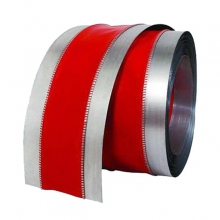
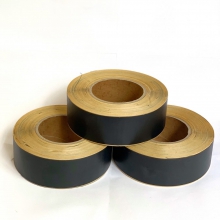
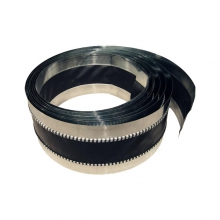
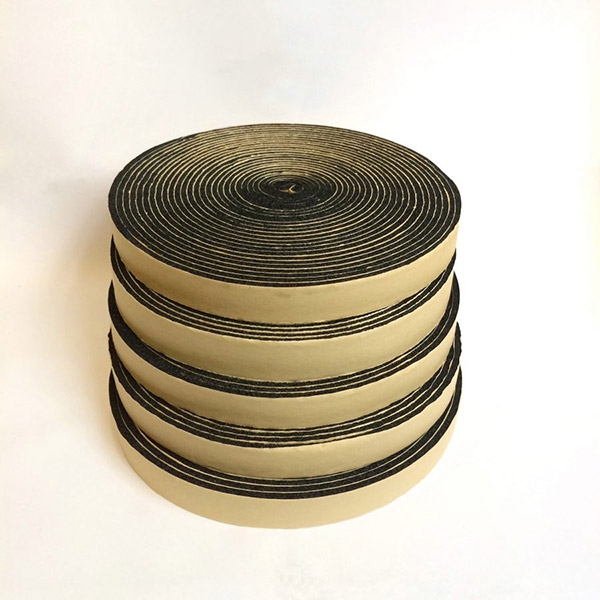
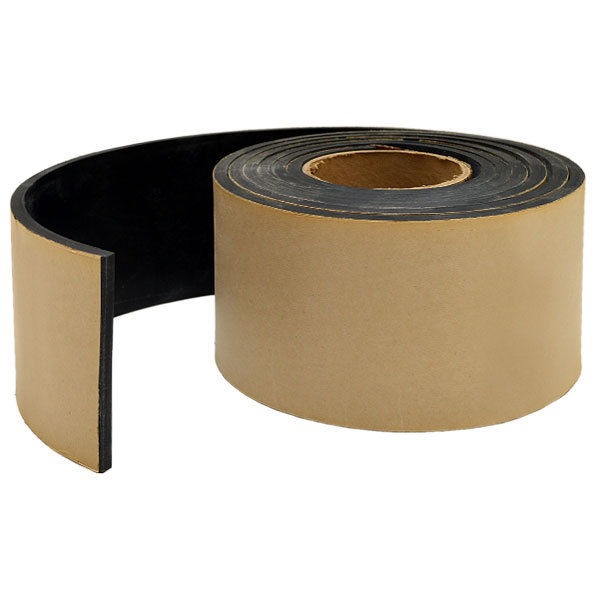
A duct gasket is a roll-type material made from foam rubber (commonly NBR or EPDM) with high elasticity, thermal insulation, and soundproofing properties. The outer surface is pre-coated with adhesive, making installation much faster and simpler compared to traditional sealing methods.
Gaskets come in various thicknesses and widths, typically 5–10 mm thick, 20–30 mm wide, and 10 m per roll. They are commonly used to seal joints, gaps, or act as cushioning between contact surfaces in duct systems.
Using duct gaskets not only simplifies installation but also helps:
Prevent cold air leakage and energy loss
Improve thermal insulation and reduce operating costs
Reduce vibration and noise, improving indoor comfort
Provide moisture and mold resistance, extending system lifespan
Meet airtightness standards in industrial facilities, malls, and hospitals
According to LEED standards and modern HVAC practices, sealing duct joints with gaskets is essential to ensure energy efficiency and indoor air quality.
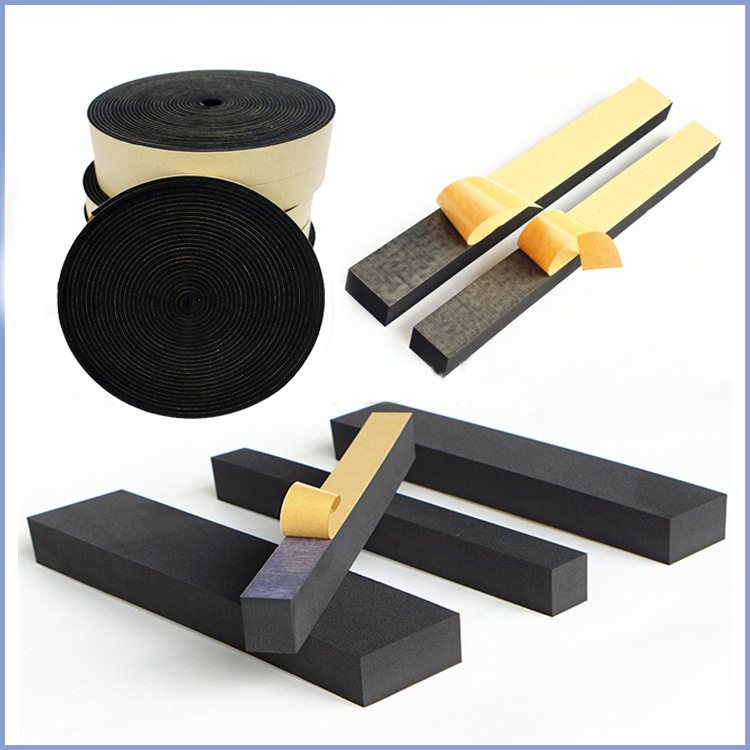
NBR duct gaskets are made from nitrile rubber foam, a synthetic material with excellent oil and chemical resistance. The foam structure makes it lightweight, elastic, and easily compressible—ideal for sealing areas requiring airtightness or subject to slight vibration.
This rubber is processed using physical cross-linking, not traditional chemical bonding, providing superior thermal stability and durability even in harsh temperature or humid environments.
Unlike ordinary foam materials, NBR gasket foam has a fully closed-cell structure, which:
Completely blocks moisture and air penetration
Enhances thermal insulation and soundproofing
Prevents mold and bacterial growth
Therefore, it is preferred in moisture-prone environments such as cold rooms, basement ducts, and industrial HVAC systems.

NBR rubber operates within -50°C to 110°C, suitable for both residential and industrial HVAC systems.
Excellent insulation: Thermal conductivity only 0.034 W/m·K
Effective soundproofing: Closed-cell structure absorbs sound waves
Chemical resistance: Resists oil, grease, solvents, and moisture
Thanks to the closed-cell structure and specialized adhesive, NBR gaskets adhere well to metal and plastic surfaces. Compression strength ≥ 3–6 H ensures airtight sealing even under repeated pressure.
Density 85 kg/m³ provides long-term elasticity without deformation
Meets ASTM D6435 and UL 94 fire safety standards
With pre-applied adhesive, NBR gaskets:
Reduce installation time by up to 50%
Require no additional glue, staples, or tape
Provide clean installation without damaging surfaces
During maintenance, old gasket can be easily removed and replaced without affecting the duct system.

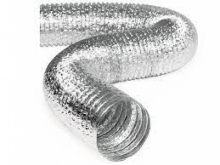
Seal flexible-to-rigid duct joints in buildings
Cushion between flanges and steel frames to prevent air leakage
Reduce vibration in AHU and FCU units
Seal technical gaps in basements and cold rooms
Soundproof and dust-proof door/window frames
Cushion between glass and aluminum or stainless frames
Seal floor-to-ceiling gaps in cleanrooms and cold storage
Due to high elasticity and adhesion, NBR gaskets can be reused in systems requiring flexible disassembly.
Selection depends on installation location, duct size, and insulation requirements:
Thickness: 5 mm (common for rectangular duct joints); 6–10 mm for larger gaps/flanges
Width: 25–30 mm for standard ducts, 40 mm for larger ducts
Density: ≥ 85 kg/m³ for long-term elasticity
Adhesive: Must bond well to galvanized steel surfaces
Note: For humid areas (basements, AHU), choose fully waterproof and fire-rated products.
Clean surface: Remove dust, oil, rust using cloth or alcohol
Measure & cut: Cut gasket accurately with a sharp blade
Peel adhesive backing: Slowly remove protective film, avoid dust contamination
Apply gasket: Press evenly to avoid bubbles or gaps
Compress joint: Ensure proper sealing when assembling duct sections
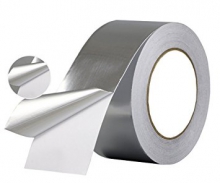
Tip: After installation, check corners manually. If slight lifting occurs, reinforce with aluminum HVAC tape.
Do not apply on wet surfaces
Do not reuse peeled gasket
Store in cool, dry place away from sunlight
Replace every 3–5 years depending on environment
NBR duct gaskets are not just accessories but a strategic solution for stable, efficient, and safe HVAC operation. With closed-cell moisture resistance, sound insulation, and fire safety, they play an essential role in modern technical systems. Proper selection, installation, and maintenance will maximize long-term performance and durability.