 100% genuine goods Payment on delivery Nationwide Delivery
Hotline
(+84) 906922412
100% genuine goods Payment on delivery Nationwide Delivery

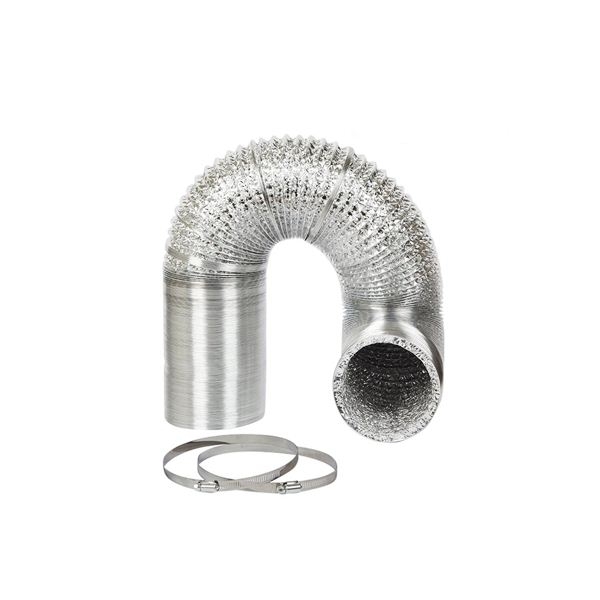
Description:
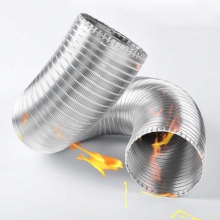
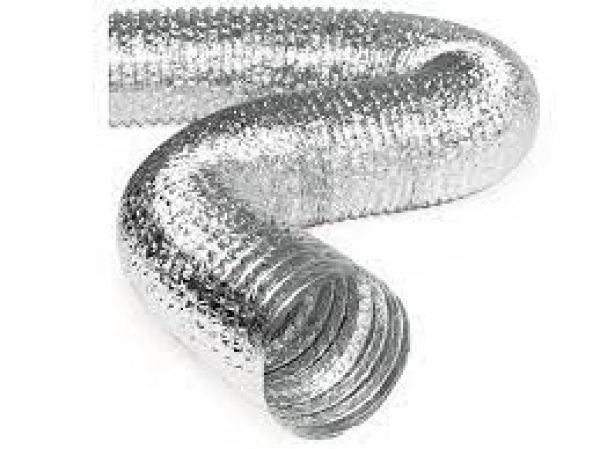
Spiral aluminum structure, flexible, easy to bend and install
Lightweight, quick installation, cost-saving
Suitable for medium-pressure ventilation systems
Flame-retardant, compliant with ASTM D635 and UL 94
ROHS certified – safe for health
Moisture-resistant, mold-resistant, stable operation
Ideal for high-rise buildings and commercial centers
Parameter:
| Product code | OM |
| Flame-retardant outer layer | ASTM D635; UL 94 |
| Diameter range | D100mm – D400mm |
| Bending radius | 0.54 × D (mm) |
| Operating temperature range | -30°C to 150°C (ASTM D4591) |
| Maximum air velocity | 30 m/s |
| Working pressure | >2500 Pa; t = 2h |
| Water absorption | <0.01% (ASTM D2305) |
| Axial tear strength | 250 N (ASTM E345) |
| Standard length | 8 m / duct |
| EU Restriction of Hazardous Substances (ROHS – 2001/95/EC) | Outer jacket complies with ROHS – 17ZGC0323001RR (**) |
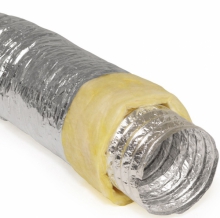
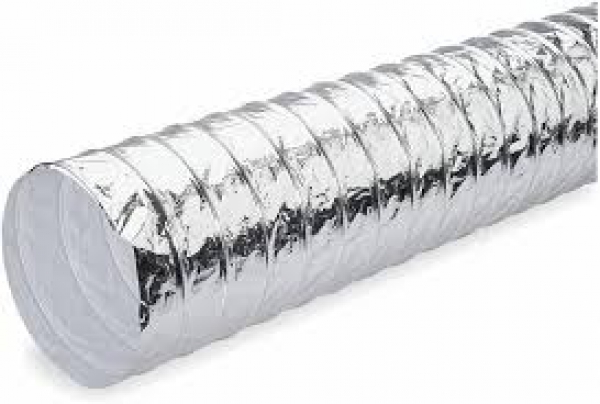
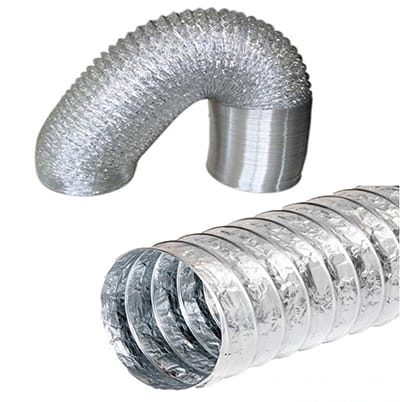
The non-insulated flexible duct is manufactured from multiple layers of high-grade aluminum, providing strong mechanical strength and excellent resistance to kinking or collapse. Between the aluminum layers is a reinforced spiral steel wire that helps the duct maintain its shape when bent or stretched. This is the key factor that gives the duct high elasticity and mechanical durability, making installation easier in complex or hard-to-reach locations.
The combination of aluminum and steel wire increases pressure resistance while minimizing deformation during transportation and operation.
Covering the aluminum layer is a white foil outer layer that not only improves appearance but also provides flame-retardant performance according to ASTM D635 and UL 94 standards. This foil layer also helps reduce heat absorption and prevents moisture penetration, keeping the duct dry and durable under various environmental conditions.
Additionally, the foil surface makes cleaning easier and reduces dust and bacteria accumulation — an important factor for environments requiring high hygiene standards such as hospitals, shopping malls, and production areas.
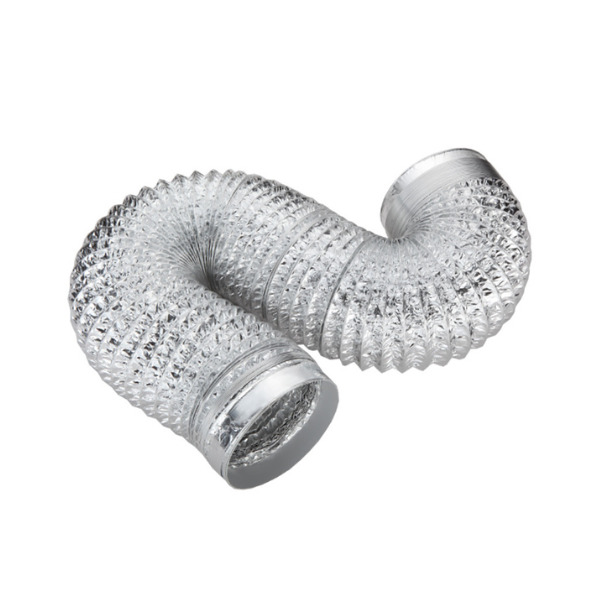
With its flexible structure, the duct can bend in multiple directions without complex connectors, making it suitable for limited-space duct systems. It can easily connect to round, oval, or rectangular outlets while maintaining airtightness and minimizing leakage.
In case of fire, the non-insulated structure allows toxic gases to dissipate quickly, helping reduce risks to people and property.
When choosing air ducts for HVAC or ventilation systems, users often consider insulated vs. non-insulated types. Each has its own strengths depending on application and environment.
Easy installation: High flexibility allows bending and fitting into difficult positions without specialized tools or many accessories.
Cost-effective: Without insulation, the product is more affordable than insulated ducts, ideal for budget-focused projects.
Multiple size options: Prodetech ducts are available from D100mm to D400mm for various systems.
Flame-retardant and durable: Meets ASTM standards for flame resistance and tear strength, ensuring long service life in medium-pressure ventilation systems.
When heat retention is not required or when used indoors with stable ambient temperature.
In factories, warehouses, or commercial buildings needing basic ventilation without strict energy-loss concerns.
Projects requiring fast installation and budget optimization.
Due to its simple, flexible, and cost-effective design, this duct is widely used in many applications, especially low- to medium-pressure ventilation systems.
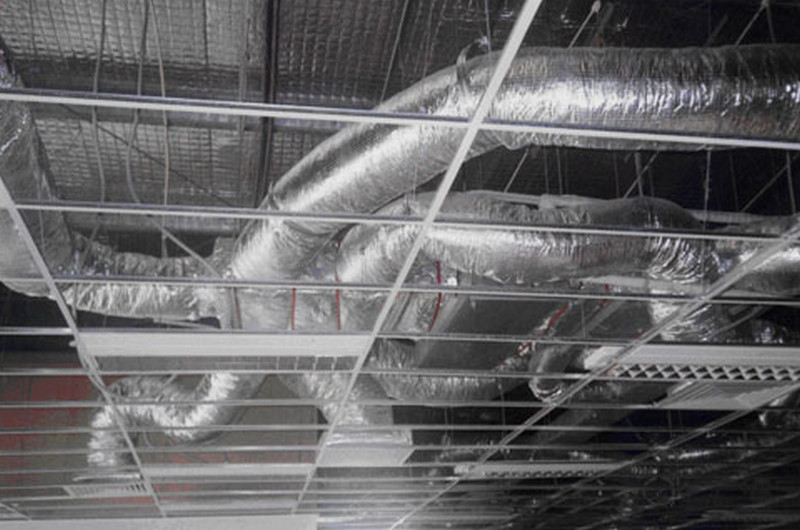
Ventilation systems in high-rise buildings and malls are often hidden above ceilings, requiring lightweight, flexible, and easy-to-install materials. Non-insulated flexible ducts are ideal for this environment. They can be installed through gypsum ceilings, narrow technical shafts, and curved sections without complex fabrication.
Without insulation, the duct reduces total system weight and cost while still effectively supplying fresh air, exhausting air, and circulating airflow in enclosed spaces.
Not all duct sections in HVAC systems require insulation. Short auxiliary ducts or ducts passing through temperature-controlled areas are suitable for non-insulated types.
Prodetech ducts support working pressure >2500 Pa for 2 hours and air velocity up to 30 m/s, ensuring continuous, stable, and leak-free airflow compliant with residential and light-industrial HVAC standards.
Common applications include:
Basement, technical room, and warehouse ventilation
Hot air and odor extraction in industrial kitchens or processing areas
Factory and workshop ventilation where heat retention is not required
The duct does not absorb moisture, resists mold, and contains no harmful materials, making it suitable for industries such as food processing, pharmaceuticals, and electronics.
| Criteria | Non-Insulated | Insulated |
| Structure | Aluminum + spiral steel + foil | Includes fiberglass or foam insulation |
| Thermal insulation | No | Yes – maintains temperature |
| Thickness | Thin – easy to bend | Thicker – harder in tight spaces |
| Weight | Lighter | Heavier |
| Fire resistance | Yes (ASTM D635, UL 94) | Yes – depends on type |
Cost: Non-insulated ducts are typically 20–40% cheaper than insulated ones.
Application: Non-insulated ducts suit basic ventilation without thermal requirements, while insulated ducts are better for long duct runs or areas with large temperature differences (e.g., central air-conditioning systems).
Choose non-insulated duct if:
Ambient temperature is stable
Budget optimization is required
Only airflow transmission is needed without insulation
Choose insulated duct if:
Temperature inside the duct must be maintained
Long duct runs may cause condensation
Noise reduction is required
Non-insulated flexible air duct is a smart solution for projects requiring efficient ventilation, easy installation, and cost savings. With Prodetech quality and international certifications, the product ensures both technical performance and long-term operational safety. Proper understanding, selection, and installation will help maximize its effectiveness.