 100% genuine goods Payment on delivery Nationwide Delivery
Hotline
(+84) 906922412
100% genuine goods Payment on delivery Nationwide Delivery

Description:
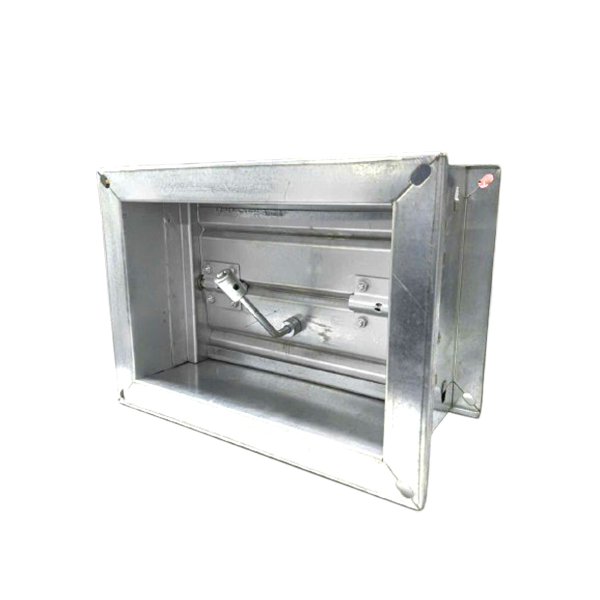
Protects air or gas duct systems from excessive pressure
Automatically relieves pressure when exceeding the setpoint, no electricity required
Extends the lifespan of fans and the entire HVAC system
Quick installation design, easy replacement and maintenance
Available in multiple sizes, suitable for all duct types
Stable operation with low noise performance
Optimal solution for pressurization systems and cleanroom applications
Complies with HVAC, GMP, and fire safety (PCCC) technical standards
Competitive cost with high operational efficiency and long-term value
Parameter:
| Product code | G-PRD1 |
What is a Duct Pressure Relief Damper in HVAC?
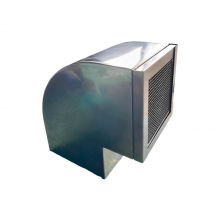
A duct pressure relief damper is a mechanical device (optionally with automatic sensing) installed directly on supply or return air ducts. Its main purpose is to regulate and release excess pressure when abnormal pressure build-up occurs inside the duct system. This helps to:
Protect ducts from bulging, tearing, or joint failure
Maintain stable system pressure and avoid airflow imbalance
Extend the lifespan of the HVAC system and related equipment (fans, motors, VCD dampers, etc.)
For example, when airflow becomes uneven between duct branches or terminal outlets are blocked, pressure can accumulate in certain duct sections. A pressure relief damper automatically releases excess pressure to keep the system stable.
Some inexperienced engineers or contractors may overlook pressure relief dampers in HVAC designs. However, omitting this device can cause serious problems when the system operates under fluctuating pressure conditions.
Uneven fan operation between air zones → sudden pressure spikes
Blocked ducts due to dust, debris, or faulty terminal devices (diffusers, grilles)
All supply outlets closed while the fan is still running
BMS control failure causing fans to run while dampers remain closed → “air lock”
System imbalance between supply and return air
Without a pressure relief damper, ducts may be damaged or produce excessive vibration and noise.
Pressure gauge exceeds design limit (typically > 250 Pa)
Duct vibration or abnormal noise at elbows or transitions
Cracks or damage at joints or supports
Airflow imbalance across zones despite normal equipment operation
High-rise buildings, shopping malls, cleanrooms, and high-pressure ventilation systems typically require pressure relief dampers by design standards.
A standard duct pressure relief damper typically includes:
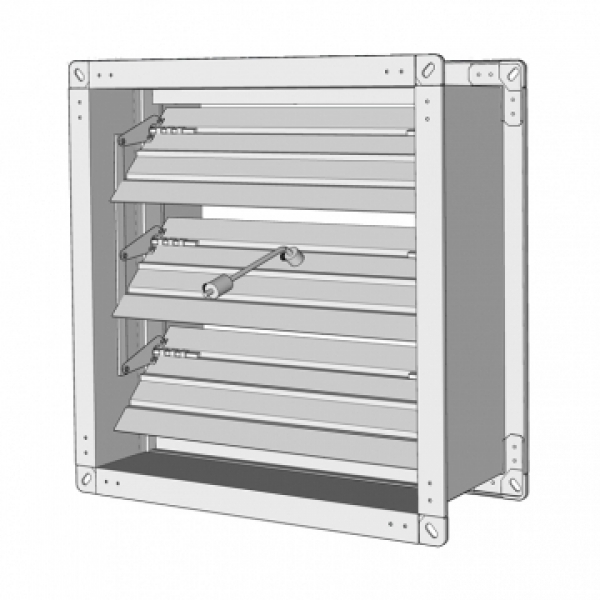
Frame (Housing): Galvanized steel or stainless steel casing, rectangular or square to match duct size
Blade(s): Single or multi-blade connected by a shaft
Spring or Pressure Control Mechanism: Triggers opening when pressure exceeds setpoint
Rubber Seal (Gasket): Ensures airtight closure and reduces noise
Mechanical Linkage: Lever or spring system for quick response
Advanced models may include pressure sensors or servo motors integrated with BMS for intelligent control.
Normal condition: Pressure ≤ setpoint → damper remains closed and sealed
Pressure rises: When pressure exceeds threshold (e.g., 200–300 Pa), force overcomes spring tension → damper opens → excess air is released
Pressure drops: Spring returns blade to closed position automatically
Mechanical dampers operate without electricity, saving energy and ensuring automatic protection.
| Criteria | Mechanical Damper | Automatic Damper |
| Operation | Spring & mechanical force | Sensor + electric control |
| Power supply | Not required | Required |
| Application | Simple systems | Smart/BMS systems |
| Cost | Lower | Higher |
Mechanical: Suitable for small factories or auxiliary areas
Automatic: Used in malls, hospitals, large industrial HVAC systems
One-Way: Releases air outward only → used in cleanrooms, cold storage, controlled airflow zones
Two-Way: Allows bidirectional airflow depending on pressure → used in positive/negative pressure rooms (healthcare, labs)
Selection depends on overall HVAC system design and pressure behavior.
| Installation Area | Purpose | Recommended Type |
| Main supply duct | Protect supply fan from blockage | Mechanical or automatic |
| Return air corridor | Prevent excessive negative pressure | Two-way damper |
| Ceiling technical space | Pressure control in offices/cleanrooms | Sensor-based damper |
| Stairwell pressurization | Maintain stable pressure during door opening | Automatic BMS-linked damper |
Pressure relief dampers are mandatory in HVAC systems with precise pressure control, such as cleanrooms and fire pressurization systems.
Airflow type: Bidirectional airflow requires a two-way damper
Design pressure: Typical opening threshold 150–300 Pa (adjustable for some systems)
Maintenance accessibility: Choose durable, high-quality seals if maintenance is difficult
BMS compatibility: Required for smart buildings and remote monitoring
Fire/GMP requirements: Some applications require fire-resistant, corrosion-resistant, or hygienic materials
For large projects, consulting with manufacturers or HVAC specialists is recommended to ensure correct damper selection.