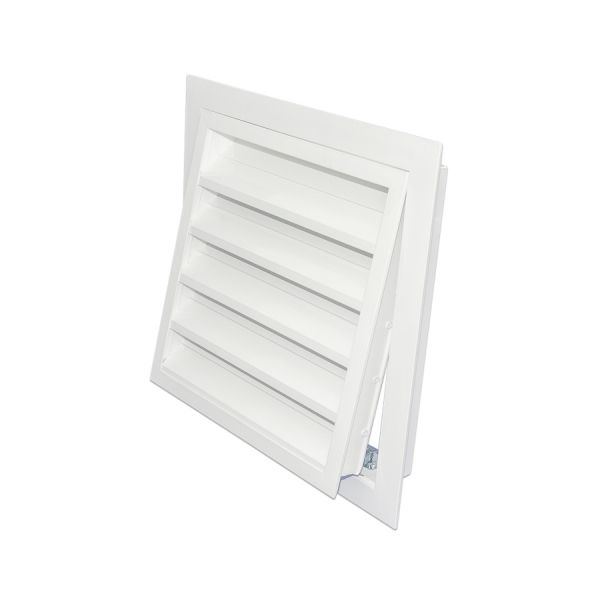
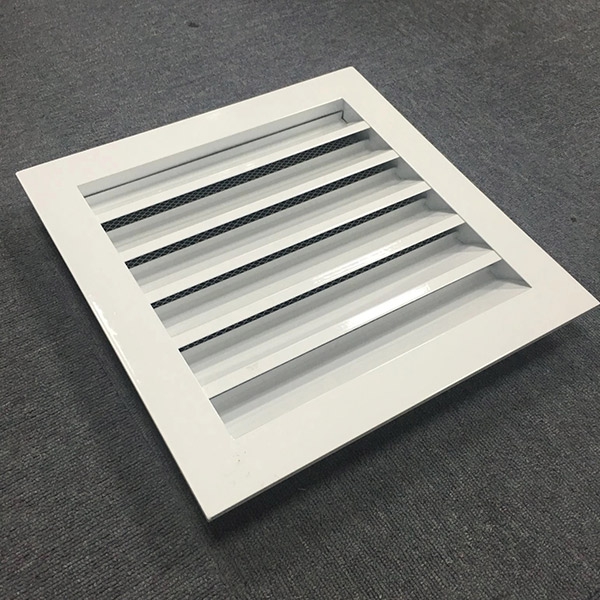
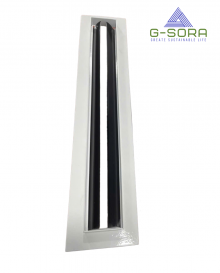
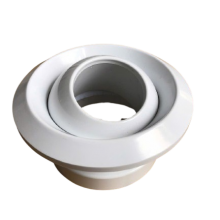
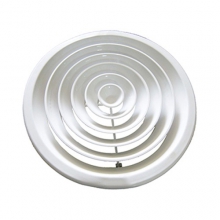
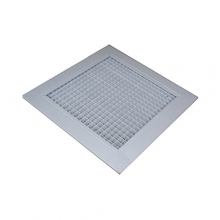
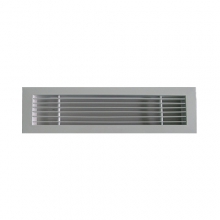
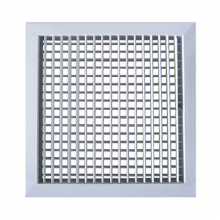
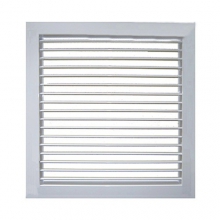
The rainproof louver air grille is a specialized outdoor ventilation component used in HVAC systems. Its inclined blades allow proper airflow while preventing rainwater, dust, and insects from entering. The structure typically features Z-shaped or C-shaped blades set at a 30°–45° angle, optionally combined with an insect screen or drainable plenum to enhance water removal, reduce pressure loss, and maintain stable airflow.
Operating Principle and Role in Outdoor HVAC Systems
Simple Operating Principle
Air passes through the gaps between the blades, while rainwater—falling vertically—is blocked by the blade angle and profile depth. Premium models may include stainless-steel insect screens or coarse dust filters to provide additional internal system protection.
Role in Outdoor HVAC Installations
-
Ensures fresh air intake: Allows outdoor air to enter the ventilation or air-conditioning system, supplying oxygen to enclosed spaces.
-
Protects internal equipment: Prevents rain, dust, and insects from entering ducts, fans, and heat exchangers.
Without a proper weather louver, HVAC systems may suffer from reduced efficiency, higher maintenance costs, and potential equipment damage.
Rain Protection Structure of the Louver
Z-Blade Design and Water Resistance
The rainproof function relies on Z- or C-shaped inclined blades positioned at 30°–45°, which:
-
Deflect rainwater outward instead of allowing penetration
-
Prevent wind-driven rain ingress
-
Retain water using drip edges and reverse channels
High-performance models use double-bank blade construction, achieving up to 98–100% rain rejection efficiency (AMCA standard, when installed correctly).
Materials and Protective Coating
Common construction materials include:
The powder coating enhances durability against UV, moisture, salt air, and mild chemicals while maintaining aesthetic appearance. Standard colors include white, grey, and matte black, with custom options available.
Insect Screen and Optional Accessories
Optional rear components may include:
-
Fine stainless-steel mesh for insect and pest protection
-
Aluminum mesh for coarse dust filtration
-
Drainable plenum box for extreme weather water collection
-
Mounting brackets or hinges for easy installation
Selecting the Right Outdoor Weather Louver
How to Measure and Determine Standard Size
Typical standard sizes are based on duct opening or wall opening dimensions:
-
Common sizes: 300×300, 400×400, 500×500, 600×600 mm
-
Custom sizes available for large or special projects
Basic measurement steps:
-
Measure duct opening (Width × Height)
-
Determine face size (usually +20–30 mm each side)
-
Check louver depth (affects airflow and water resistance)
Incorrect sizing may reduce airflow performance and affect installation aesthetics.
Airflow, Pressure, and Ventilation Performance
When selecting a rainproof louver, ensure airflow (CFM) and face velocity remain within recommended limits to avoid noise, inefficiency, or system stress.
Reference airflow table
| Size (mm) |
Recommended Airflow (m³/h) |
Face Velocity (m/s) |
| 300×300 |
300 – 500 |
2 – 3 |
| 500×500 |
800 – 1200 |
2.5 – 3.5 |
| 600×600 |
0 – 1800 |
3 – 4 |
Basic airflow formula
Q = A × V
Where:
-
Q = Airflow (m³/h)
-
A = Free area (m²)
-
V = Air velocity (m/s)
Always verify manufacturer technical data, as blade design can cause 10–20% performance variation.
Installation and Maintenance Guidelines
Proper Installation Procedure
-
Verify actual opening dimensions before installation
-
Ensure blades face downward to prevent water ingress
-
Fix securely using stainless screws or aluminum frame
-
Seal edges with waterproof gasket or sealant
-
Install insect screen if required
Optional: Install drain pan and water outlet for extreme weather conditions.
Routine Maintenance Schedule
-
Every 3 months: Clean dust and check mounting stability
-
Every 6 months: Remove and clean internal surfaces (if hinged)
-
Every 12 months: Inspect seals and powder coating condition
Use soft brush, mild detergent, or air blower. Avoid sharp tools or strong chemicals to prevent coating damage.
Practical Applications of Outdoor Louvers
Residential and Commercial Buildings
-
Installed at ventilation shafts, balconies, or façade openings
-
Enhances exterior aesthetics while blocking rain and wind
Factories and Industrial Plants
Basements and Parking Areas
Cold Storage and Data Centers
-
Maintains controlled airflow and pressure balance
-
Requires corrosion-resistant, high-performance louvers
The outdoor rainproof louver is not just a ventilation accessory but a critical component for protecting and optimizing HVAC system performance. With proper selection and correct installation, it ensures efficient airflow while preventing rain, dust, and insects from entering—providing long-term reliability and system protection.

 100% genuine goods