 100% genuine goods Payment on delivery Nationwide Delivery
Hotline
(+84) 906922412
100% genuine goods Payment on delivery Nationwide Delivery

Definition and function
A diffuser is a terminal device in an HVAC (heating, ventilation and air-conditioning) system that distributes cooled air or fresh air from the system into the occupied space. It plays two key roles: effective air distribution and optimised system performance.
Diffusers are mainly used for supply air, although some special types are designed for return air or both.

How air diffusion works
Diffusers work on forced air diffusion: treated air from the ductwork is discharged through a specially designed terminal in order to:
Advantages over bar grilles and slot diffusers
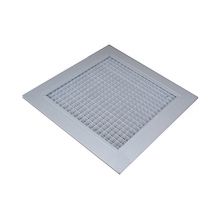
Where even, quiet, efficient airflow and good aesthetics are required, diffusers are usually the better choice than bar grilles or slots – especially 4-way diffusers in high ceilings or where multi-directional distribution is needed.
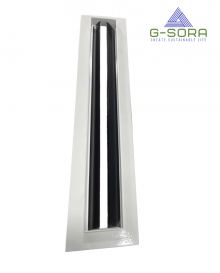
| Criteria | Ceiling diffuser | Bar grille | Slot diffuser |
|---|---|---|---|
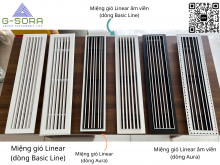
| Air distribution | Even, multi-directional, no drafts | Fixed direction, concentrated | Linear along the slot |
| Coverage | Wide (especially 4-way) | Narrower, depends on blade angle | Medium, along the slot axis |
| Noise | Low, as outlet velocity is reduced | May whistle at high velocity | Stable at low–medium velocity |
| Coanda effect | Yes – air clings to the ceiling | Weak or none | Yes (if long enough and correctly positioned) |
| Aesthetics | High, square/round designs suit gypsum ceilings | Medium, visible bars | Very high, slim and concealed |
| Typical use | Homes, offices, meeting rooms, hotels | Warehouses, plant rooms, small spaces | Luxury apartments, modern interiors |

Choose diffusers based on the airflow (CFM or m³/h) delivered by the AC equipment, as this determines size, quantity and distribution pattern. Airflow is derived from AC capacity or the room cooling load, for example:
Why airflow matters:
Low ceilings (<2.7 m): gentle, wide-spread diffusers that do not blow on occupants; slim slot diffusers are preferred; reduce outlet velocity for quietness and comfort.
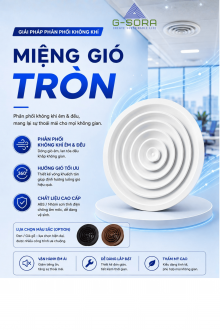
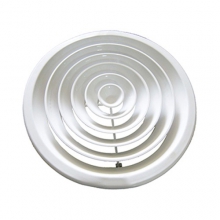
Standard ceilings (2.7–3.6 m): 4-way square diffusers or round diffusers with a plenum; use the Coanda effect so air clings to the ceiling and spreads evenly.
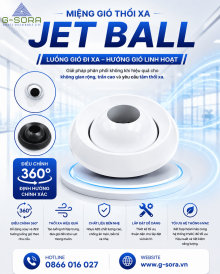
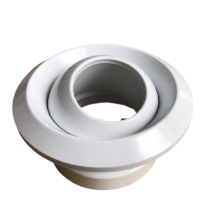
High ceilings (>3.6 m): stronger airflow is needed – round diffusers or adjustable/jet diffusers; calculate velocity so air reaches the occupied zone.
Medium rooms (15–30 m²): 1–2 diffusers depending on layout; 4-way square diffusers give even coverage.
Large rooms (>30 m²): 2–4 diffusers arranged symmetrically; prepare shop drawings to balance airflow and avoid opposing jets.
In homes, premium offices and showrooms, quiet operation and good looks are essential. Diffuser noise mainly comes from excessive outlet velocity, narrow restrictive slots and loose or vibrating components. For quiet spaces (bedrooms, meeting rooms, offices), choose:
Aesthetic options: recessed square diffusers that match gypsum ceilings; slim slot diffusers for luxury apartments; round diffusers as a modern accent in open-plan designs; concealed or light-integrated diffusers for spas and hotels. Finishes include white, black, bronze or gold powder coat, colour-matched to ceilings, walls and lighting.
Over time, diffusers collect dust, moisture or grease (especially in kitchens and factories), so ease of removal for cleaning and maintenance is an important criterion.

Removable design: choose diffusers with a separate frame and a core that is spring- or hinge-mounted; avoid cores fixed with rivets or bolts.
Surface material: powder-coated aluminium, stainless or galvanised steel resist dust and corrosion and are easy to wipe clean. Do not use plastic diffusers in high-heat or greasy areas.
Location: position diffusers where they can be reached by hand; for ceilings 4–5 m high or more, provide flexible connections or access equipment.
Integrated features: some diffusers include a dust filter or VCD directly behind – check whether the filter can be removed or the damper adjusted from the front.
For long-term efficiency and lower operating costs, prioritise diffusers that are easy to remove, corrosion-resistant and accessible for regular cleaning.
Homes and apartments – prioritise aesthetics, gentle quiet airflow and easy maintenance: 2–3 way square or wide-spread round diffusers that do not blow directly on occupants.
Offices and high-rise buildings – prioritise even distribution, low noise and gypsum-ceiling integration: 4-way square diffusers, especially in large open-plan rooms.
Factories and industrial parks – prioritise high airflow, robust construction and quick flexible-duct connection: large round diffusers (Ø250–Ø400 mm) with deep necks, combined with plenum boxes; angled vanes carry air further while keeping direction under control.
As quality, technical and aesthetic demands on HVAC systems rise, choosing a reliable supplier is key to long-term performance. G-SORA supplies ceiling diffusers made to the real technical requirements of each project.
G-SORA is not just a supplier but a technical partner for contractors, MEP consultants and owners: product and position advice, shop drawing support, flexible handling of urgent orders and variations, and a transparent warranty.
Need high-quality ceiling diffusers? Contact G-SORA today for free technical advice and a fast quotation.