What is a BMS for HVAC control?
In modern building management, a BMS is an essential tool for optimising operations. For HVAC – the system that uses the most energy – integrating a BMS saves energy while keeping indoor air quality at its best.
A BMS (building management system) is a smart system that monitors and controls building services, with HVAC as one of its most important elements. BMS-based HVAC control integrates smart technology to control, monitor and optimise heating, ventilation and air-conditioning equipment.
A BMS for HVAC:
- Monitors the operating status of all HVAC equipment
- Automatically adjusts temperature, airflow and humidity
- Records data, analyses it and raises fault alarms
- Connects with fire, security and lighting systems to create a complete smart building

Main components
1. Hardware
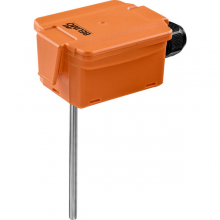
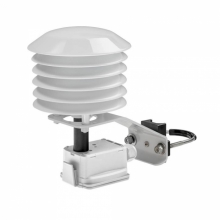
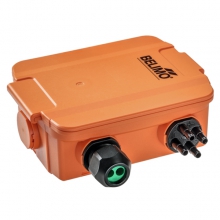
- Sensors: temperature, humidity, pressure, airflow, CO₂ (see our HVAC sensors)
- Controllers: PLC, DDC or dedicated modules for data processing
- Actuators and final elements: motorised valves and dampers, fan motors, compressors, pumps
- Central server: collects data from all control points
2. Software
- SCADA interface: visual HVAC schematics
- Energy management software: tracks power consumption and optimises performance
- Alarm system: sends fault notifications by email, SMS or mobile app
3. Communication network
- Common protocols: BACnet, Modbus, LonWorks
- Connect all devices into one unified BMS
How it works
- Data collection: sensors send readings to the controllers.
- Processing: controllers compare readings with set points.
- Control: if limits are exceeded, the system automatically adjusts chillers, fans, pumps or valves.
- Monitoring and display: all information is shown on the software interface.
- Logging and analysis: data is stored to evaluate performance and produce regular reports.
The role of a BMS in HVAC control
A BMS acts as the "brain" of the HVAC system. With centralised, real-time monitoring and optimisation, it delivers:
1. Energy savings – HVAC typically accounts for 40–60% of a building's electricity use. A BMS reduces this through scheduled start/stop, capacity matched to real load and optimised chiller, AHU and FCU operation.
2. Better indoor air quality (IAQ) – CO₂ control, maintained fresh-air rates, and temperature and humidity tuned to each zone.
3. Continuous operation – early warnings when equipment behaves abnormally, preventing major failures and downtime.
4. Centralised management – all HVAC operations on a single interface, with remote monitoring over the internet.

Benefits
- 20–30% lower electricity costs
- Longer equipment life through correct-load operation
- Lower staffing costs thanks to automation
- Higher property value by meeting smart and green building standards (LEED, LOTUS)
Applications
- Office and commercial buildings: lower operating costs, better occupant experience
- Hotels and resorts: comfortable temperature and humidity for guests
- Hospitals and cleanrooms: sterile conditions with tight pressure and air quality control
- Factories: stable conditions for machinery and products
- Data centres: precise temperature control to protect servers 24/7
Trends in modern BMS
- IoT and AI: learning usage patterns and optimising energy automatically
- Smartphone control: remote management anytime, anywhere
- Renewable integration: combining with solar and wind to reduce grid load
- Decentralised BMS: more flexible and scalable for large projects
Implementation process
- Needs assessment: building characteristics, cooling loads and energy targets
- Control design: selecting sensors, controllers and protocols
- Installation: deploying hardware on site
- Software configuration: programming control logic and SCADA screens
- Testing and commissioning: on-site verification and tuning
- Operator training: making sure the facility team can use the system
Advice for BMS projects
- Choose an experienced BMS and M&E contractor.
- Prefer internationally compliant equipment for easy integration and expansion.
- Plan regular maintenance for hardware and software.
- Invest in smart solutions from the start for long-term savings.
As green buildings and smart cities develop, BMS-based HVAC control is no longer just a technology option but a necessity. It cuts operating costs, protects occupant health and raises property value. For VAV boxes with Belimo BACnet controllers and HVAC sensors ready for BMS integration, contact G-SORA.

 100% genuine goods