 100% genuine goods Payment on delivery Nationwide Delivery
Hotline
(+84) 906922412
100% genuine goods Payment on delivery Nationwide Delivery

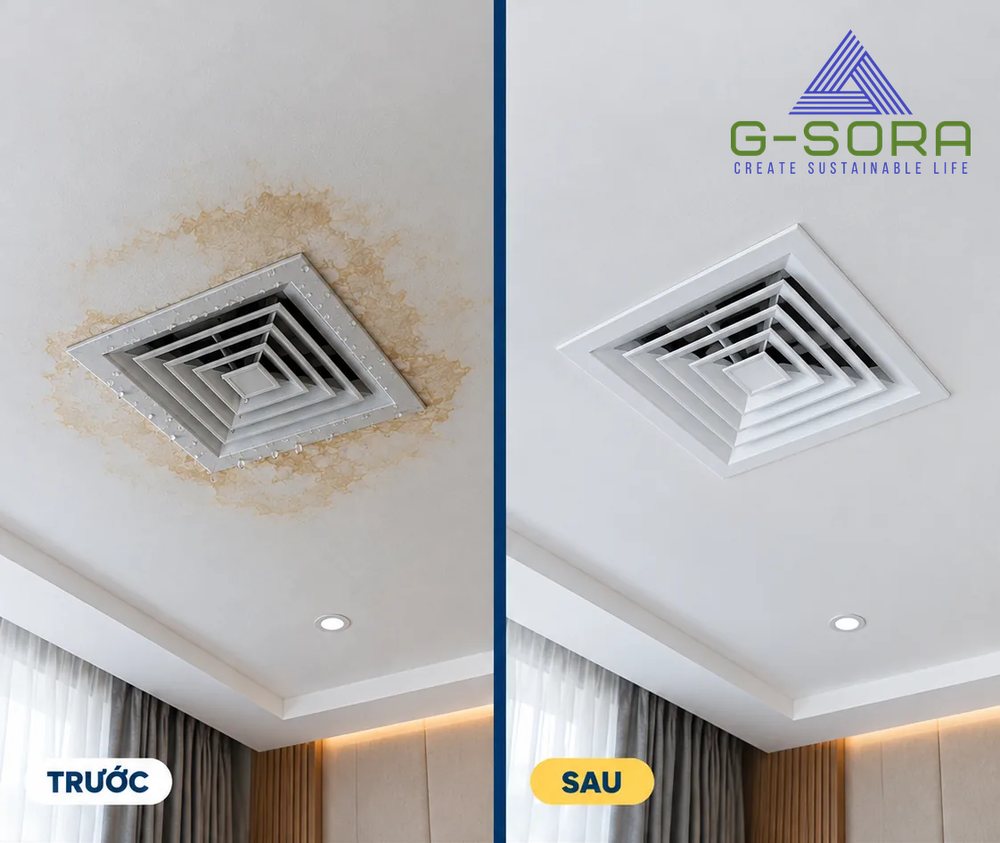
A few months after handover, yellowish stains start spreading across the gypsum ceiling around the air conditioning diffusers. The owner calls for warranty work, the contractor takes the ceiling down and repaints it – and a few weeks later the stains are back. In most cases the culprit is condensation on the air diffuser, and the root cause lies in the air conditioning system, not in the diffuser alone. This article explains why it happens, how to recognise it and the 4 steps to fix it for good.
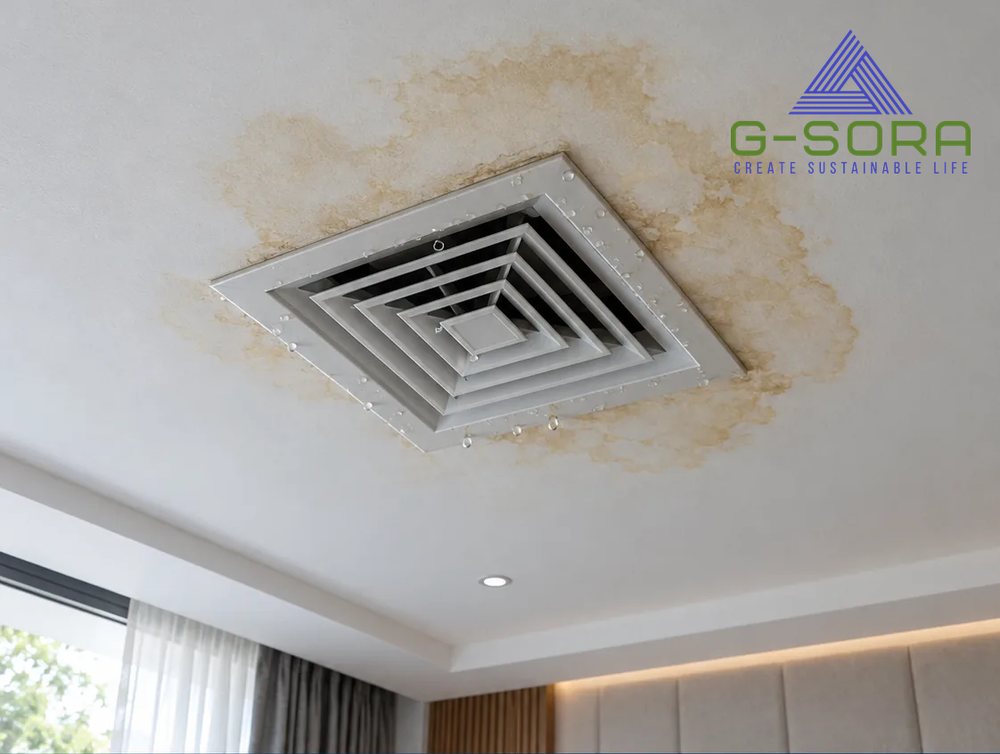
Air always contains water vapour. When humid air touches a surface colder than its dew point, the vapour condenses into droplets – just like a glass of iced water "sweating". The diffuser is the end point of the system, where cold supply air meets room air, so this is where water usually shows up. The root cause usually comes from the air conditioning system itself:
Example: a room at 28°C and 75% relative humidity has a dew point of about 23°C. As soon as the diffuser surface is colder than that, water starts to form, drips down and soaks into the gypsum board. That is why fixing condensation has to start with the system, not just with swapping the diffuser.
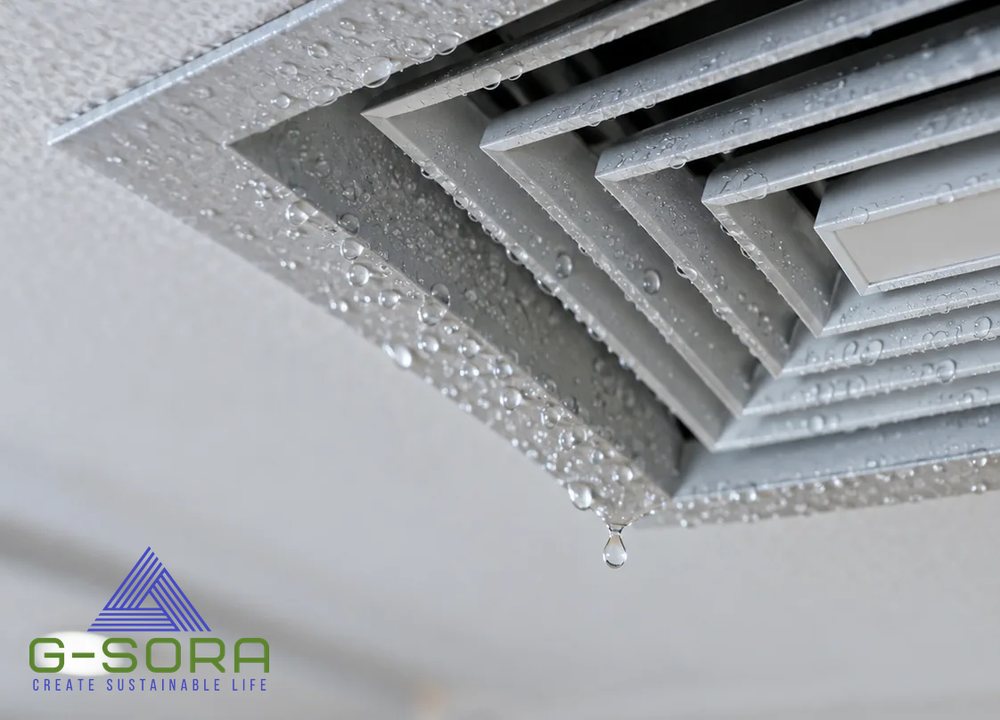
If water runs in streams or only one corner is wet, also check the indoor unit's condensate drain and the roof – that may be a leak rather than condensation.
Neck connections, plenum boxes and flexible ducts above the ceiling must be fully insulated with no open joints. Any gap in the insulation will condense water right above the ceiling, which is hard to spot until the stains appear.
Ask a technician to check the supply air temperature and the airflow at each diffuser against the design. Air that is too cold or too weak both make the diffuser surface colder than the room's dew point.
Keep doors closed while the AC is running and check that fresh air is properly dehumidified. Gaps between the diffuser and the ceiling let humid air rise above the ceiling, so seal around the frame with gasket tape or sealant.
Once the system has been fixed, plastic air diffusers are an extra layer of protection at the end point: plastic conducts heat far less than metal, so the surface does not get as cold and condensation is reduced. Plastic diffusers are widely used in villas, hotels, resorts and coastal projects, as they are also rust-free, light and easy to clean. Aluminium diffusers remain a good fit for many projects when the system is properly designed and insulated. Read more: Aluminium or plastic air diffusers – read this before you install.
Note: plastic diffusers reduce condensation; they do not replace proper insulation, supply air adjustment and humidity control. All 4 steps together fix the problem at its root.

Usually not. Condensation happens when humid air meets a surface that is too cold, even when the system runs normally. Common causes are a supply air set point that is too low, airflow that is not right or gaps in the insulation, so it is still worth having a technician check the system.
Not the root cause. Condensation comes from the system: supply air, insulation and room humidity. Aluminium conducts heat well, so the problem shows up more easily on aluminium diffusers when the system has issues; with a properly designed and insulated system, aluminium diffusers work normally.
Not necessarily. Light stains only need a stain-blocking primer and repainting. Replace gypsum boards only when they are soft, sagging or mouldy. The key is to fix the source of condensation first, otherwise the stains will return.
Plastic diffusers reduce it significantly because plastic conducts heat less than metal. But if the insulation has gaps or the room is very humid, water can still form. Fix the system first, then add plastic diffusers.
Yes. Plastic diffusers suit homes, villas, apartments, offices, hotels and resorts – especially in humid or coastal areas. For factories, very large sizes or high-impact areas, aluminium diffusers may be a better fit.
Usually yes, if the new diffuser fits the existing ceiling opening. Send a photo and the size of your current diffuser and G-SORA will recommend a suitable replacement.
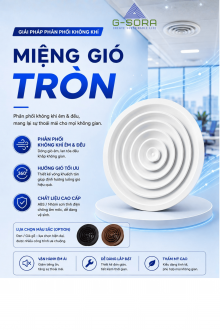
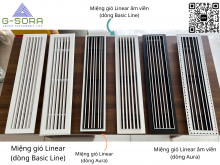
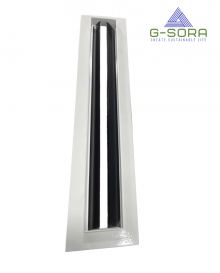
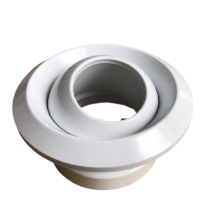
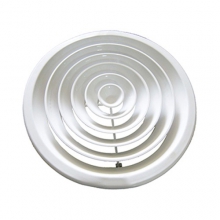
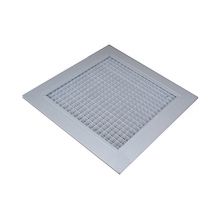
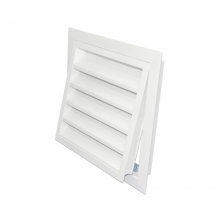
G-SORA supplies plastic air diffusers in many types – square, round, linear and louver – in stock at our warehouses in Cu Chi (Ho Chi Minh City), Xuan Phu (Da Nang) and Quoc Oai (Hanoi).
???? See our plastic air diffusers
Ceiling stains on your project? Send us a photo of the site or your bill of quantities on Zalo and G-SORA will advise and quote the same day.
Hotline/Zalo: +84 866 016 027