 100% genuine goods Payment on delivery Nationwide Delivery
Hotline
(+84) 906922412
100% genuine goods Payment on delivery Nationwide Delivery

In modern HVAC systems, damper actuators play a key role in automating and optimising airflow. This article explains clearly and in detail how they work.
A damper actuator is an electric or electro-automatic drive that sets the blade position of dampers in ductwork. It allows the HVAC system to control airflow and direction precisely, saving energy and improving efficiency.
Air must be distributed accurately to each zone. Without actuators, airflow must be adjusted by hand – slow and inefficient. With actuators, the system can:
| Component | Main function |
|---|---|
| Electric motor | Rotates the damper shaft, AC or DC powered |
| Gearbox | Reduces speed and increases torque |
| Control board | Receives signals from the BMS or sensors and drives the motor |
| Position sensor | Tracks the current damper position to stop the motor at the right point |
| Limit switches | Limit the maximum rotation and protect against over-travel |
| Return spring | (Optional) returns the damper to closed on power failure, common in fire-safety systems |
| Shaft coupling | Transfers rotation from the motor to the damper blades |
24 VAC, 230 VAC, 24 VDC, etc., depending on system design, supply voltage and safety requirements.
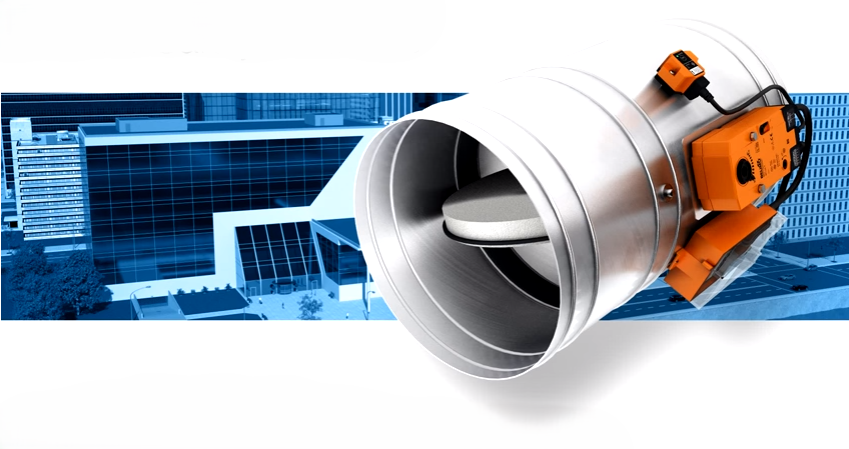
Step 1 – Receive the control signal from the BMS, a thermostat or sensors (pressure, temperature, CO₂…). The signal may be binary (on/off) or proportional (the opening follows the voltage or current signal).
Step 2 – Process the signal: the control board drives the motor in the correct direction.
Step 3 – Rotate the shaft: motor motion is geared down and transferred to the damper shaft; blades rotate from 0° (closed) to 90° (open).
Step 4 – Limit travel and hold position: once the required angle is reached, the position sensor and limit switches stop the motor.
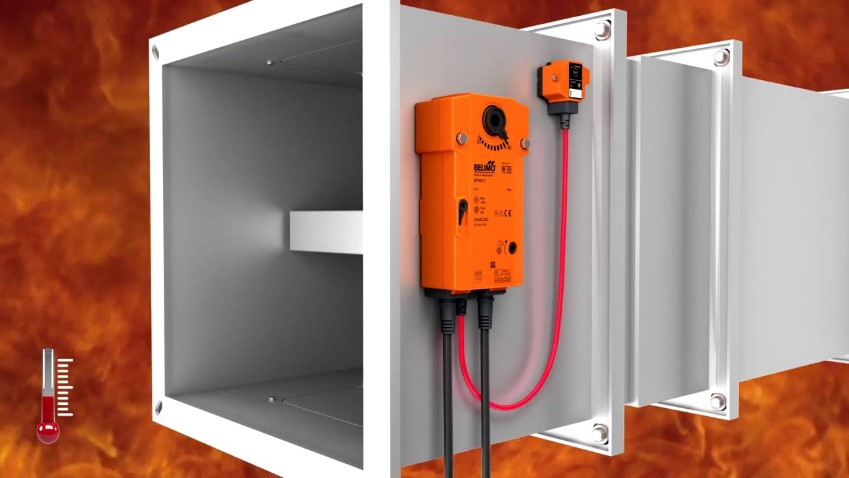
Step 5 – Return on power failure (if fitted): spring-return actuators move the damper to a safe position (usually closed) – vital in fire-safety systems and laboratories.
| Sector | Main purpose |
|---|---|
| Factories | Fresh-air control by working zone |
| Hospitals and cleanrooms | Pressure and sterile airflow control |
| Smart buildings | Airflow by floor or zone demand |
| Shopping malls | Ventilation for crowded areas |
| Fire protection systems | Automatic smoke damper operation on fire alarm |
G-SORA is more than an HVAC equipment supplier – we advise on and deliver smart ventilation control solutions:
Understanding how damper actuators work makes it easier to choose the right solution for each project. Beyond automation, they are key to energy savings, air quality and the safety of the whole HVAC system. See our VAV box with Belimo controller or contact G-SORA.