
Hotline (+84) 906922412

Motorised Dampers: Features and Applications

A motorised damper automatically controls airflow in HVAC systems, saving energy, regulating airflow precisely and integrating easily with smart building controls.

In the age of automation, the motorised damper is an essential device in modern ventilation and air-conditioning systems. This article explains its features, operating principle and real-world applications.

1. What is a motorised damper?

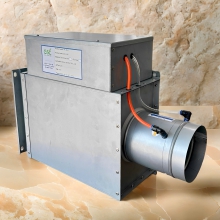
A motorised (electric) damper is a damper fitted with an electric actuator, allowing its blades to open and close automatically in response to a control signal. It controls airflow through HVAC ductwork more accurately and conveniently than a manual damper.

Motorised dampers can work independently or be connected to a building management system (BMS) to optimise the whole system.

Motorised damper features and applications

2. Construction and operating principle

Construction

  • Damper body: galvanised steel, stainless steel or aluminium
  • Blades: rotate on a shaft to regulate airflow
  • Shaft: connects the blades to the actuator
  • Actuator (electric motor): controls the shaft angle
  • Drive mechanism: gear train, return spring, etc.

How it works

When the control system (BMS or a switch) sends a signal to the actuator, the motor rotates the shaft to open or close the damper to a set angle (0–90°). Control modes include:

  • On/off – fully open or fully closed
  • Modulating – continuous proportional control
  • Spring return – returns to a safe position on power failure

3. Types of motorised dampers

By control function

  • On/off dampers: two positions, fully open or fully closed
  • Modulating dampers: opening controlled by a 0–10 VDC or 4–20 mA signal
  • Spring-return dampers: automatically return to their default position on power loss

By shape

  • Round dampers: for round ducts, usually smaller sizes
  • Square/rectangular dampers: for rectangular ducts and larger systems

By application

  • Standard volume control dampers
  • Fire dampers – close automatically above a temperature threshold
  • Pressure relief dampers

4. Key features

  • Full automation: no manual operation needed
  • High accuracy: airflow set to the desired percentage
  • BMS integration: smart signal communication
  • Energy savings: opens only as much as actually needed
  • Greater safety: can close automatically in an emergency

Motorised damper features and applications

5. Real-world HVAC applications

  • Offices, hotels, high-rise apartments: zone-by-zone airflow control
  • Hospitals and cleanrooms: positive/negative pressure and air quality control
  • Data centres: stable temperature and humidity
  • Food and pharmaceutical plants: preventing cross-contamination, controlling clean air
  • Conference rooms and theatres: airflow adjusted to occupancy

6. Motorised vs manual dampers

Criteria Motorised damper Manual damper
Control mechanism Electric motor Mechanical lever
Automation High Low
BMS integration Yes No
Accuracy Very high Medium
Safety on power failure Can close automatically (spring return) No
Cost Higher Lower
Best for Modern buildings Small, simple projects

7. Buying criteria

  • Size: matched to the round or rectangular duct
  • Actuator type: on/off, modulating or spring return
  • Power supply: 24 VAC, 230 VAC, etc.
  • Control signal: analogue (0–10 VDC, 4–20 mA) or digital
  • Damper material: suited to humidity and corrosion
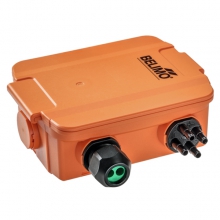
  • Reputable actuator brands: Belimo, Siemens, Honeywell and others
  • Standards: SMACNA, EN 12101, TCVN 5687

8. Installation and maintenance

Installation: confirm the airflow and opening direction; install airtight without leakage; check the control signal and power supply; place the damper where it is easy to inspect and maintain.

Maintenance: check actuator operation every 6 months; clean the blades and lubricate the shaft if needed; check feedback signals and recalibrate the opening angle.

9. BMS integration

  • Standard control signals: 0–10 VDC or 4–20 mA
  • Position feedback for accurate BMS monitoring
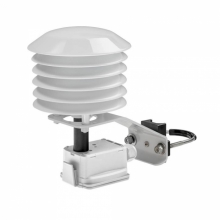
  • Smart control logic: opening based on temperature or CO₂ sensors
  • Scheduled opening and closing to reduce operating costs

Motorised dampers are a key part of smart buildings, sensor-driven self-adjusting HVAC, energy savings of up to 30%, unattended operation and IoT connectivity for remote monitoring by phone or software. Many large commercial buildings in Vietnam now use BMS-integrated motorised dampers.

11. Actuator brands common in Vietnam

  1. Belimo (Switzerland) – widely regarded as the industry benchmark for durability, reliability and easy integration. G-SORA's VAV boxes use Belimo controllers.
  2. Siemens (Germany) – suited to large projects, cleanrooms and hospitals.
  3. Sauter, Honeywell and other international brands available in Vietnam.

Choose based on reputation, origin, warranty service, spare-parts availability and compatibility with the existing system.

The motorised damper is not just a technical component but a smart automation solution that controls airflow efficiently, reduces energy losses and improves safety in residential and industrial buildings. See our VAV box with Belimo controller or contact G-SORA for advice.

FAQ

Can motorised dampers be used in homes?

Yes. In homes with ventilation or central air conditioning, motorised dampers regulate airflow room by room and save electricity.

Are motorised dampers easy to install?

With a system diagram or M&E support, installation is straightforward, as dampers are made to standard duct sizes.

Will a power cut damage a motorised damper?

No. Spring-return models automatically return to a safe position, and the system resumes normally when power is restored.

Can motorised dampers work with CO₂ sensors?

Yes – a common solution in meeting rooms, classrooms and data centres to maintain air quality.

(+84) 906922412 ZALO MESSENGER EMAIL BACKTOP