 100% genuine goods Payment on delivery Nationwide Delivery
Hotline
(+84) 906922412
100% genuine goods Payment on delivery Nationwide Delivery

The manual damper is the simplest type of damper in an HVAC system. This article explains its construction, applications and how to make the most of its important role in modern ventilation and air conditioning.
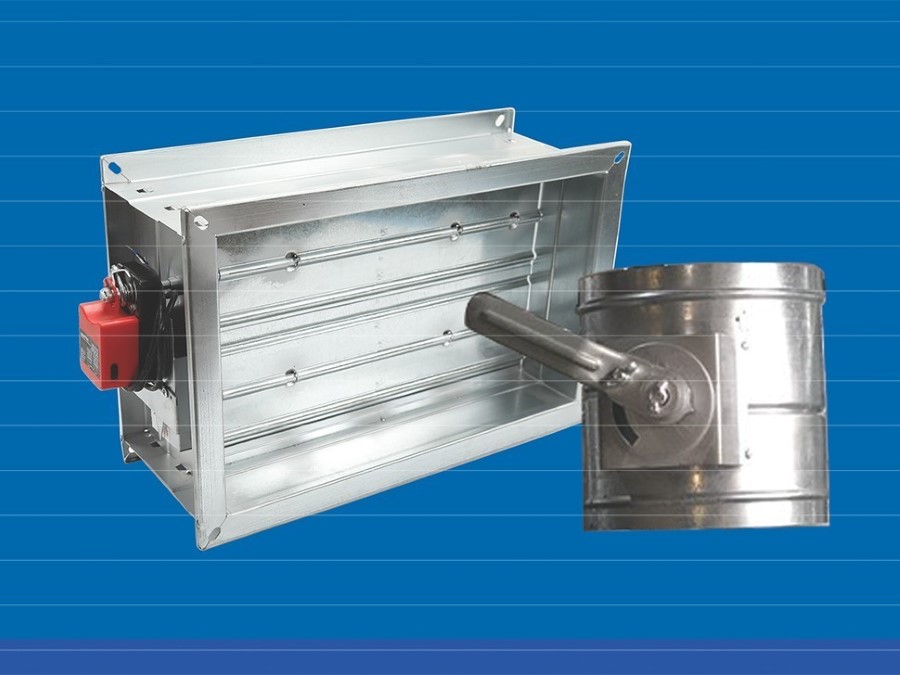
A manual damper is a hand-operated device that adjusts airflow in HVAC ductwork. Using a lever or handle, the user opens or closes the blades to control the supply or extract airflow as required.
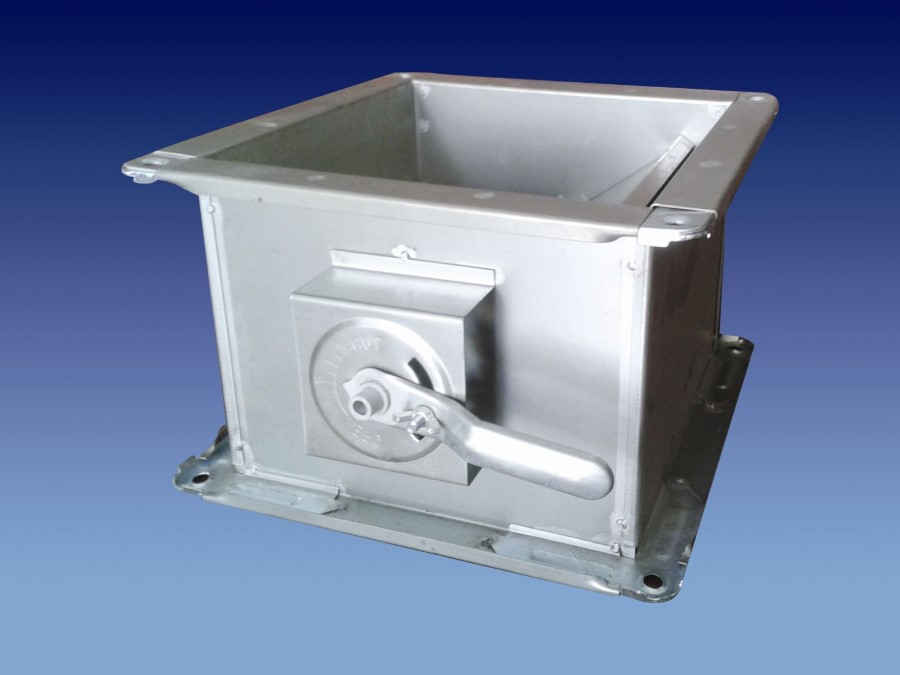
Moving the lever rotates the blades on their shaft. As the blade angle changes from 0° to 90°, airflow changes accordingly. Airflow is verified with sensors or direct measurement for accurate balancing.
Airflow balancing – distributes air evenly between branches so every space gets enough air.
Pressure regulation – controls pressure in each zone, protecting fans and avoiding noise and vibration.
Energy savings – correctly set airflow keeps the system from overloading and reduces power consumption.
Safety and fire protection – some models include a fusible link that closes automatically in a fire.
| Advantages | Disadvantages |
|---|---|
| Low cost, readily available | Not automatic, needs an operator |
| Easy to operate, maintain and replace | Manual adjustment, not perfectly precise |
| No power required | Hard to integrate with smart systems/BMS |
| High mechanical durability with quality materials | No remote control |
Homes, apartments and offices – at supply diffusers to adjust room airflow; in riser service boxes to balance floors.
Factories – distributing air to production and storage areas; shut-off dampers to isolate zones.
Shopping malls, cinemas, meeting rooms – controlling pressure in enclosed rooms and adjusting airflow by time or event.
Hospitals and cleanrooms – special stainless, sealed dampers to control clean and contaminated airflows between zones.
Installation
Maintenance
| Criteria | Manual damper | Motorised damper |
|---|---|---|
| Control | Manual | Electronic (BMS) |
| Accuracy | Medium (lever-based) | Very high (sensors, controls) |
| Cost | Low | Higher due to the actuator |
| Best for | Small systems, tight budgets | Large systems needing automation |
| Maintenance | Simple | Actuator and electrical checks |
In high-rise buildings, manual dampers are typically installed in main ducts on plant floors to split airflow between branches, in branch ducts serving offices and halls, and above gypsum ceilings near supply diffusers for local room adjustment.
For example, in a premium apartment project in Ho Chi Minh City with a VRF central system and floor-by-floor supply ducts, each floor uses 1–2 manual dampers to balance airflow to actual demand, saving energy and reducing noise from the main supply fan.
In practice, maintenance teams use a balometer (flow hood) to measure airflow and set manual dampers so air is evenly distributed between zones.
Standard-compliant dampers reduce local pressure losses (ΔP), ensure safe operation and simplify technical submissions and acceptance.
HVAC design is now done in AutoCAD MEP or Revit, where manual dampers are modelled directly in 3D BIM with size (W x H or Ø), position in the duct or ceiling, distance from diffusers and design opening angle (usually 45°–60° for a reasonable pressure drop). This improves coordination with electrical, plumbing and structural trades, reduces clashes, speeds up installation and allows automatic quantity take-off (BOQ) for quotations and orders.
The manual damper is a basic but important HVAC component: stable, affordable and durable – the optimal choice for small and medium supply systems or wherever manual airflow adjustment is needed. For systems requiring automation, combine or replace manual dampers with motorised ones.
When should I use a manual damper instead of an automatic one?
When automatic control is not needed, the damper is in an accessible service space, or the project needs to minimise investment.
Can manual dampers provide fire protection?
Yes, models with a fusible link close automatically at high temperature (typically 70–250°C).
Can manual dampers be used in medical cleanrooms?
Yes, if made of stainless steel with tight seals and easy cleaning, although such systems usually prefer VAV or motorised dampers.
Are manual dampers easy to replace?
Yes – their simple construction and lack of electrics make removal and replacement easy.
Contact G-SORA for HVAC air distribution products and advice.